Dissolved Oxygen Sensor Guide
July 31, 2026


1. What Is a Turbidity Sensor?
In simple terms, a turbidity sensor measures how cloudy or hazy a liquid is. The cloudiness comes from tiny particles such as silt, algae, bacteria, and organic matter that scatter light passing through the water. The result is reported in Nephelometric Turbidity Units, or NTU.
First and foremost, turbidity is important because it affects both water quality and treatment processes. High turbidity can shield harmful microbes from disinfection, foul membranes, and interfere with optical sensors. For this reason, a reliable turbidity sensor is a standard tool in drinking water plants, wastewater facilities, and environmental monitoring stations.
Furthermore, turbidity is one of the most common online measurements because it responds quickly to process changes. As a result, operators can detect filter breakthrough, sediment upset, or chemical dosing problems within seconds rather than hours.
2. Why Turbidity Monitoring Matters
Turbidity monitoring serves three main purposes in modern water management. In fact, most treatment plants would struggle to meet permit limits without it.
- Drinking water safety: The US EPA Surface Water Treatment Rule requires combined filter effluent turbidity to stay below 0.3 NTU in 95% of samples. High turbidity can hide pathogens and reduce disinfection success.
- Wastewater compliance: Treated effluent usually must stay below 2–5 NTU before discharge. Real-time monitoring catches process upsets before they become permit violations.
- Process protection: High turbidity can damage membranes, clog UV disinfection systems, and cause errors in optical COD and nitrate sensors. A turbidity sensor placed upstream protects downstream equipment.
Meanwhile, turbidity is also a key indicator in environmental monitoring. Rivers with high turbidity may be experiencing erosion, algal blooms, or industrial discharge. For this reason, agencies such as the USGS Water Resources program operate long-term turbidity monitoring networks.
3. Turbidity Measurement Methods Compared
Broadly speaking, there are three ways to measure turbidity. The right method depends on the required accuracy, particle size, and application.
| Method | How It Works | Best For | Units |
|---|---|---|---|
| Nephelometry | Measures light scattered at 90° from the source | Low turbidity; drinking water; environmental | NTU / FNU |
| Attenuation / Absorption | Measures how much light is blocked by particles | High turbidity; wastewater; sludge | FTU / mg/L TSS estimate |
| Visual / Secchi disk | Human eye judges depth of disk disappearance | Field surveys; lakes; rough estimates | Meters (depth) |
3.1 How Nephelometric Turbidity Sensors Work
A nephelometric turbidity sensor sends a beam of light into the water and measures the amount of light scattered at a 90-degree angle. The more particles in the water, the more light is scattered, and the higher the turbidity reading.
By contrast, light absorption methods look at how much light is blocked or absorbed by particles. These work better at very high turbidity where nephelometric sensors can saturate. However, for most clean-water and medium-range applications, nephelometry is the preferred approach.
4. Choosing the Right Turbidity Sensor
Not every turbidity sensor fits every application. To start, consider these six points before you buy:
- Expected turbidity range: Drinking water needs 0–10 NTU with high resolution. Raw wastewater may need 0–4,000 NTU or more.
- Measurement angle: Nephelometric sensors (90°) give the best sensitivity at low turbidity. Attenuation sensors work better at high solids.
- Light source wavelength: ISO 7027 specifies 860 nm infrared to avoid color interference. White-light sensors may give different readings in colored water.
- Self-cleaning: Continuous deployment in wastewater needs automatic wipers or ultrasonic cleaning. Without them, biofouling causes drift within days.
- Material and rating: Look for 316L stainless steel, sapphire optical windows, and IP68 rating for submerged use.
- Output protocol: RS485 Modbus RTU is the industrial standard. 4–20 mA is common for simple loop-powered setups.
4.1 Turbidity Sensor Selection Matrix
| Application | Best Sensor Type | Key Feature | Typical Range |
|---|---|---|---|
| Drinking water — filter effluent | Low-range nephelometric | Resolution 0.01 NTU; bubble rejection | 0–10 NTU |
| Drinking water — raw intake | Mid-range nephelometric | ISO 7027; self-cleaning wiper | 0–200 NTU |
| Wastewater — clarifier effluent | Mid-range nephelometric | Robust wiper; chemical resistance | 0–500 NTU |
| Wastewater — mixed liquor | Attenuation or high-range | High solids tolerance | 0–4,000 NTU |
| River / lake monitoring | Nephelometric with logger | Solar power; anti-fouling | 0–1,000 NTU |
| Industrial process water | ISO 7027 nephelometric | Traceable calibration; 4–20 mA | 0–100 NTU |
5. Googolwater Turbidity Sensor Solutions
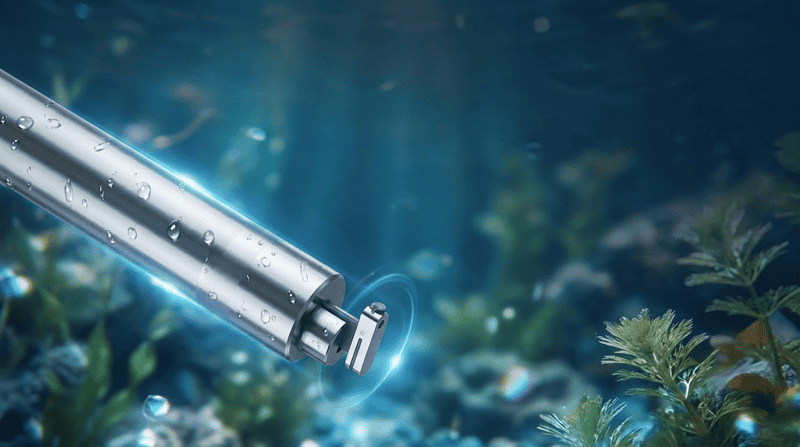
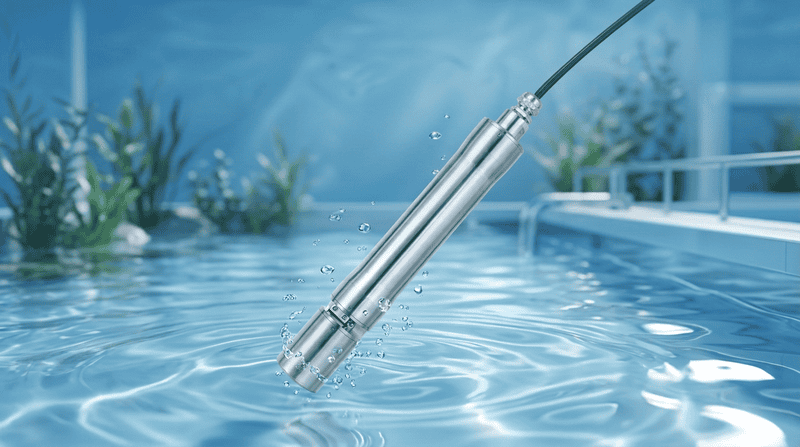
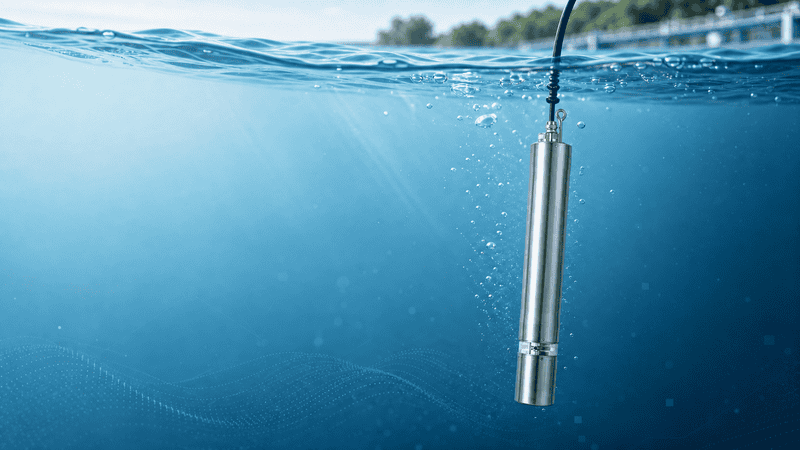
Googolwater offers rugged turbidity sensors for both clean-water and dirty-water applications. Importantly, all models use infrared nephelometry and include automatic cleaning options for long-term field use.
Optical Turbidity Sensor
ISO 7027 nephelometric probe, 860 nm IR LED, 0–4,000 NTU range, RS485 Modbus output. Auto wiper and IP68 housing for harsh environments.
View Product →Ultra-Low Turbidity Sensor
High-resolution probe for drinking water and treated effluent. 0–20 NTU range, bubble rejection algorithm, resolution down to 0.01 NTU.
View Product →Advanced Resolution All-in-One Sensor
Measures turbidity, TSS, COD, BOD, nitrate, and temperature in one probe. Ideal for plants that need wide water quality coverage.
View Product →5.1 Model Comparison
| Specification | Optical Turbidity Sensor | Ultra-Low Turbidity Sensor | Advanced All-in-One |
|---|---|---|---|
| Method | Nephelometric, 90° | Nephelometric, 90° | Multi-wavelength optical |
| Range | 0–4,000 NTU | 0–20 NTU | 0–1,000 NTU (typical) |
| Resolution | 0.1 NTU | 0.01 NTU | 0.1 NTU |
| Wavelength | 860 nm IR (ISO 7027) | 860 nm IR (ISO 7027) | 254 nm + 550 nm + IR |
| Self-cleaning | Auto wiper | Auto wiper | Auto wiper |
| Output | RS485 Modbus | RS485 Modbus | RS485 Modbus, Bluetooth |
| Protection | IP68 | IP68 | IP68 |
6. Turbidity Sensor Calibration and Maintenance
6.1 Calibration Standards
Formazin was the traditional turbidity standard for many years. However, many modern sensors are calibrated with StablCal or other stable polymer standards that mimic formazin but last longer. For drinking water applications, secondary standards must be traceable to NIST-equivalent reference materials.
6.2 Calibration Steps
- Zero point: Use deionized or filtered water with near-zero turbidity. This sets the baseline.
- Span point: Use a standard near the upper end of your expected range, such as 20 NTU for drinking water or 200 NTU for wastewater.
- Verification: Check the reading in a mid-range standard. If the error exceeds 5%, repeat the calibration.
6.3 Maintenance Schedule
| Interval | Task | Notes |
|---|---|---|
| Weekly | Inspect optical window and wiper blade | Clean gently with soft cloth if fouled |
| Monthly | Single-point verification with a stable standard | Log reading and drift over time |
| Quarterly | Two-point calibration; replace wiper if worn | Use fresh standards; check cable entry |
| Annually | Factory service or sensor replacement if drift is high | Compare against a lab reference |
7. Turbidity Sensor Applications
7.1 Drinking Water Treatment
In drinking water plants, turbidity is the most important online quality parameter after chlorine. Filter effluent turbidity must stay low to ensure disinfection works. In fact, many plants trigger filter backwash cycles based on turbidity setpoints, saving water and extending filter run times.
Furthermore, modern plants use particle counters alongside turbidity sensors to detect the first signs of filter breakthrough. While turbidity gives a bulk measurement, particle counting can reveal individual particles that may harbor pathogens.
7.2 Wastewater Treatment
In wastewater, turbidity sensors monitor clarifier performance and final effluent quality. A sudden rise in final effluent turbidity can signal sludge blanket upset, filter breakthrough, or high solids carryover. Real-time data lets operators take action before a permit violation occurs.
In addition, some plants use turbidity to control polymer dosing in dewatering processes. By measuring centrate turbidity, operators can fine-tune chemical use and reduce costs.
7.3 Industrial Process Water
Many industries need low-turbidity water for cooling, boiler feed, or product makeup. A turbidity sensor at the inlet of reverse osmosis or ultrafiltration systems can trigger pre-treatment steps and protect membranes from fouling.
7.4 Environmental Monitoring
Rivers, lakes, and estuaries are monitored for turbidity to track erosion, algal blooms, and sediment discharge from construction sites. Long-term turbidity data helps regulators tie water quality changes to land use and weather events.
8. Turbidity vs. TSS: Understanding the Difference
Although turbidity and TSS are related, they are not the same thing. Turbidity measures light scattering, while TSS measures the dry weight of particles caught on a filter. The table below explains the difference.
| Feature | Turbidity | Total Suspended Solids (TSS) |
|---|---|---|
| What it measures | Light scattering by particles | Mass of particles per volume |
| Units | NTU / FNU | mg/L |
| Speed | Real-time, < 1 second | Lab test, 30–60 minutes |
| Best use | Online process control and compliance | Regulatory reporting and permit limits |
| Particle sensitivity | Strong for fine particles | Captures all retained solids |
9. Turbidity Sensor: Frequently Asked Questions
9.1 Turbidity Sensor Performance and Standards
Q1: What is the difference between NTU and FNU?
NTU stands for Nephelometric Turbidity Unit and is based on older white-light standards. FNU stands for Formazin Nephelometric Unit and follows ISO 7027 using an 860 nm infrared source. In practice, most modern turbidity sensors report results close to each other, but ISO 7027 FNU readings are less affected by water color.
Q2: How often should I calibrate a turbidity sensor?
For drinking water applications, verify calibration monthly and perform a full two-point calibration quarterly. In dirty wastewater, check more often because fouling can shift the baseline. Always use fresh standards and clean cuvettes for the best results.
Q3: Why does my turbidity sensor drift over time?
Drift usually comes from three sources: biofilm or dirt on the optical window, wear on the wiper blade, or aging of the LED light source. Regular cleaning and wiper replacement solve most problems. If drift continues after maintenance, the sensing head may need factory service.
9.2 Turbidity Sensor Deployment and Selection
Q4: Can I use one turbidity sensor for both raw water and filtered water?
Technically yes, but it is not ideal. Raw water can reach hundreds or thousands of NTU, while filtered water must stay below 0.3 NTU. A single wide-range sensor loses resolution at the low end. For best results, use a high-range sensor upstream and a low-range sensor after filtration.
Q5: How does a self-cleaning wiper affect turbidity readings?
A good wiper keeps the optical window clean without scratching it. Each cleaning cycle takes only a few seconds and removes biofilm or sediment. The reading may briefly spike during cleaning, but it quickly settles to the true value. Set the cleaning interval based on fouling rate — usually every 15–60 minutes.
Q6: What output options do Googolwater turbidity sensors offer?
Googolwater turbidity sensors provide RS485 Modbus RTU as standard. This makes integration with PLCs and SCADA systems easy. In addition, the Advanced and Premium all-in-one models add Bluetooth and WiFi for wireless setup and cloud data logging.
Need help selecting a turbidity sensor?
Share your application — drinking water, wastewater, or industrial process — and our team will recommend the right turbidity sensor, calibration plan, and installation location.
Get a Free Technical Consultation10. Related Resources
- Ultra-Low Turbidity Sensor Guide — High-resolution monitoring for drinking water
- Optical Water Quality Sensor: Complete Guide — Principles of optical sensing
- Water Quality Sensor Selection Guide — Full parameter comparison
- COD Sensor Monitoring Guide — How turbidity affects optical COD sensors
- Wastewater Treatment Sensor Selection Guide — Application-specific recommendations