Water Quality Sensor Selection Guide: How to Choose the Right Sensor for Your Application
April 3, 2026
Industrial Water Quality Monitoring Guide | 2026 Best Practices
May 9, 2026
Wastewater Treatment Sensor Selection Guide | 2026 Best Practices
Wastewater Treatment Sensor Selection Guide
Wastewater treatment sensor selection directly impacts plant efficiency and regulatory compliance. The right sensors help operators monitor critical parameters in real time. As a result, plants can optimize treatment processes and avoid costly violations.
At Googolwater, we have supplied sensors to wastewater treatment facilities across 20+ countries. Therefore, we understand the unique challenges these plants face. This guide covers everything you need to know about wastewater treatment sensor selection. We will explain key parameters, sensor types, and installation considerations.
Furthermore, we will share practical tips from our field experience. By the end, you will know exactly which sensors your plant needs.
Why Sensor Selection Matters for Wastewater Treatment
Wastewater treatment plants must meet strict discharge standards. For instance, the U.S. EPA sets limits on BOD, COD, and nutrient levels. Meanwhile, European regulations focus on nitrogen and phosphorus removal. In Asia, many countries are tightening heavy metal monitoring requirements.
Manual sampling cannot provide the continuous data needed for modern treatment control. Consequently, plants rely on online sensors for real-time process optimization. However, choosing the wrong sensors leads to several problems:
- Inaccurate readings cause process inefficiency
- High maintenance demands increase operating costs
- Sensor fouling in harsh wastewater environments reduces reliability
- Incompatible outputs fail to integrate with SCADA systems
Proper wastewater treatment sensor selection solves these issues. It ensures reliable data, lower maintenance, and seamless system integration.
Key Parameters to Monitor in Wastewater Treatment
pH Monitoring
pH is the most fundamental parameter in wastewater treatment. It affects biological treatment efficiency, chemical precipitation, and disinfection effectiveness. Most biological processes operate optimally between pH 6.5 and 8.5.
Sensor Selection Tips:
- Choose digital pH sensors with automatic temperature compensation
- Select sensors with durable reference junctions for high-solid wastewater
- Consider sensors with self-cleaning options for primary effluent applications
Dissolved Oxygen (DO)
DO control is critical for activated sludge processes. Insufficient oxygen kills beneficial bacteria. Excessive oxygen wastes energy and can cause sludge bulking.
Sensor Selection Tips:
- Optical DO sensors require less maintenance than membrane types
- Select sensors with fast response times for aeration control loops
- Ensure sensors can handle high solids and grease common in municipal plants
Chemical Oxygen Demand (COD)
COD measures organic pollution load. It is a key regulatory parameter worldwide. Traditional COD testing takes hours. Online sensors provide immediate feedback for process control.
Sensor Selection Tips:
- UV absorption sensors work well for consistent industrial wastewater
- Optical multi-parameter sensors can measure COD, BOD, and TOC simultaneously
- Verify sensor correlation with laboratory COD methods for your specific wastewater
Ammonia and Nitrogen
Nitrogen removal is increasingly required to prevent water body eutrophication. Ammonia sensors monitor nitrification process performance. Nitrate sensors track denitrification completion.
Sensor Selection Tips:
- Ion-selective electrodes are cost-effective for ammonia monitoring
- Optical nitrate sensors avoid reagent consumption of wet chemistry methods
- Consider multi-parameter sensors that measure both ammonia and nitrate
For a deeper technical explanation of the NH3/NH4+ equilibrium and how pH affects ammonia toxicity in wastewater, see our Ammonia vs Ammonium: Complete Guide. Browse our ISE Ammonia Nitrogen Sensor for nitrification basin monitoring.
Suspended Solids and Turbidity
TSS and turbidity indicate solids removal efficiency. They are critical for clarifier control and final effluent monitoring.
Sensor Selection Tips:
- Infrared turbidity sensors work better than white light in colored wastewater
- Select sensors with automatic cleaning wipers for primary and secondary effluent
- Ultra-low turbidity sensors are needed for tertiary treatment and reuse applications
Types of Sensors for Wastewater Applications
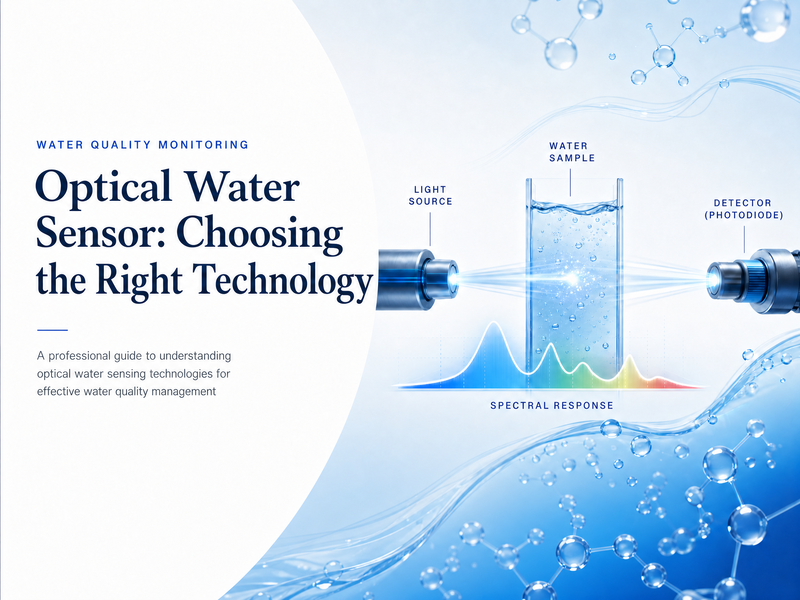
Optical Sensors
Optical sensors use light-based measurement principles. They offer several advantages for wastewater treatment:
- No reagents required, reducing operating costs
- Minimal maintenance compared to wet chemistry methods
- Multi-parameter capability in single probes
- Better stability in harsh environments
Best Applications:
- COD, BOD, TOC monitoring in secondary effluent
- Nitrate measurement in denitrification zones
- Turbidity and TSS monitoring in clarifiers
Electrochemical Sensors
Electrochemical sensors measure ionic parameters through electrode reactions. They remain essential for many wastewater applications:
- pH and ORP for process control
- Ammonia and nitrate using ion-selective electrodes
- Dissolved oxygen with optical or electrochemical methods
Best Applications:
- pH control in chemical precipitation
- ORP monitoring for disinfection and denitrification For process control: pH and ORP for disinfection and denitrification
- Ammonia monitoring in nitrification basins
Multi-Parameter Probes
Modern multi-parameter sensors combine several measurement technologies. One probe can replace multiple single-parameter instruments.
Advantages:
- Reduced installation costs and complexity
- Fewer cable runs and connection points
- Simplified maintenance and calibration
- Smaller footprint in crowded wet wells
Installation Considerations for Wastewater Sensors
Location Selection
Sensor location determines measurement representativeness and maintenance requirements:
- Primary effluent: Expect heavy fouling, select self-cleaning sensors
- Aeration basins: Ensure adequate flow past sensor for DO measurement
- Clarifiers: Avoid sludge blanket zones for suspended solids sensors
- Final effluent: Select highest accuracy sensors for compliance monitoring
Mounting Methods
Immersion mounting suits open tanks and basins. Sensors hang from handrails or mounting poles. This method allows easy removal for maintenance.
Flow-through mounting works for pressurized lines and sample streams. It provides controlled flow conditions and easier sensor protection.
Inline mounting integrates sensors directly into process piping. This approach offers the best representativeness but complicates maintenance access.
Environmental Protection
Wastewater environments are harsh. Sensors need appropriate protection:
- IP68 rating for submerged applications
- Chemical-resistant materials for industrial wastewater
- Temperature compensation for outdoor installations
- Lightning protection for exposed locations
Integration with Plant Control Systems
Modern wastewater treatment plants rely on SCADA and PLC systems. Sensor selection must consider integration requirements:
Communication Protocols
Modbus RTU remains the most common protocol in water industry. Most sensors support RS485 Modbus communication. It is reliable and widely compatible.
4-20mA analog outputs provide simple integration with older control systems. However, they offer less diagnostic information than digital protocols.
Modbus TCP and Ethernet/IP suit modern plants with networked control systems. They enable faster data transmission and remote sensor configuration.
Data Management
Consider how sensor data will be used:
- Real-time process control requires fast response sensors
- Regulatory reporting needs calibrated, traceable measurements
- Predictive maintenance benefits from diagnostic data and trend analysis
- Remote monitoring requires sensors with cloud connectivity options
For sites without permanent SCADA infrastructure, our multichannel data loggers provide reliable local storage with optional cloud sync — ideal for lagoon systems and remote pump stations.
Maintenance and Lifecycle Considerations
Calibration Requirements
Different sensors need different calibration frequencies:
| Sensor Type | Calibration Frequency |
|---|---|
| pH sensors | Weekly to monthly depending on application |
| DO sensors | Monthly calibration for optical types |
| COD sensors | Quarterly verification against laboratory methods |
| Turbidity sensors | Monthly calibration with formazin standards |
Sensor Lifespan
Typical sensor lifespans in wastewater applications:
- pH electrodes: 6-12 months in harsh conditions
- Optical DO sensors: 2-5 years for sensing element
- Ion-selective electrodes: 1-2 years for ammonia sensors
- Optical multi-parameter probes: 3-5 years with proper maintenance
Total Cost of Ownership
Initial purchase price is only part of the cost. Consider:
- Reagent costs for wet chemistry methods
- Labor for calibration and maintenance
- Downtime costs from sensor failures
- Training requirements for operators
Optical sensors typically have higher upfront costs but lower lifetime costs. Electrochemical sensors cost less initially but require more maintenance.
Regulatory Compliance Considerations
U.S. EPA Requirements
EPA regulations specify monitoring requirements for wastewater discharge:
- Continuous pH monitoring for most permits
- Daily or continuous flow measurement
- Weekly to monthly sampling for BOD, TSS, and nutrients
- Some permits require continuous ammonia or chlorine monitoring
Online sensors can supplement or replace manual sampling. However, regulatory approval may be required to use sensor data for permit reporting.
European Standards
The Urban Wastewater Treatment Directive sets stringent nitrogen and phosphorus limits. This drives demand for continuous nutrient monitoring sensors.
EN ISO 6878 and similar standards govern analytical methods. Sensors used for compliance must demonstrate correlation with reference methods.
Asian Markets
China, India, and Southeast Asian countries are strengthening wastewater regulations. Many are adopting standards similar to EU or EPA requirements.
Local certification requirements vary. CE marking is widely accepted. Some markets require additional local testing or approval.
Common Mistakes in Wastewater Sensor Selection
Mistake 1: Ignoring Wastewater Characteristics
Industrial wastewater differs dramatically from municipal sewage. High solids, extreme pH, or toxic compounds can destroy unsuitable sensors. Always analyze your specific wastewater composition before selecting sensors.
Mistake 2: Underestimating Maintenance Requirements
Some plants select low-cost sensors without considering maintenance. Budget sensors often need frequent calibration and replacement. Higher-quality sensors reduce lifetime costs despite higher purchase prices.
Mistake 3: Poor Integration Planning
Sensors must communicate with existing control systems. Verify protocol compatibility before purchase. Consider future system upgrades when selecting communication options.
Mistake 4: Inadequate Operator Training
Even the best sensors fail without proper operation. Ensure operators understand calibration procedures, cleaning requirements, and troubleshooting steps.
Case Study: Municipal Plant Upgrade
A municipal wastewater treatment plant in Southeast Asia upgraded their monitoring system. They replaced manual sampling with online sensors for key parameters.
Previous Situation:
- Daily manual sampling for COD, ammonia, and TSS
- 4-hour delay between sampling and results
- Frequent permit violations due to process upsets
Sensor Selection:
- Optical multi-parameter probe for COD, nitrate, and TSS
- Optical DO sensors in aeration basins
- Digital pH sensors with self-cleaning
Results:
- Real-time process control reduced energy costs by 15%
- Permit violations eliminated
- Laboratory testing reduced by 60%
- Payback period under 18 months
This case demonstrates how proper wastewater treatment sensor selection delivers measurable operational and financial benefits.
How to Choose the Right Sensor Supplier
Technical Support
Wastewater applications are complex. Select suppliers with:
- Application engineering support for sensor selection
- Field service capabilities for installation and commissioning
- Training programs for plant operators
- Responsive technical support for troubleshooting
Product Range
A comprehensive product range simplifies procurement and maintenance:
- Multiple sensor technologies for different applications
- Compatible transmitters and data loggers
- Replacement parts and consumables availability
- Upgrade paths as technology advances
Industry Experience
Suppliers with wastewater industry experience understand your challenges:
- Proven track record in similar applications
- Knowledge of regulatory requirements
- Understanding of plant operational constraints
- References from comparable installations
Googolwater has deployed over 20,000 sensors in wastewater and water treatment applications worldwide. Our technical team provides application support from initial selection through ongoing operation.
FAQ: Wastewater Treatment Sensor Selection
pH and dissolved oxygen are the most critical parameters. pH affects all biological and chemical processes. DO control is essential for activated sludge treatment. Most plants monitor both continuously.
Costs vary widely based on parameters and technologies. Single-parameter sensors range from $500 to $3,000. Multi-parameter probes cost $3,000 to $10,000. Complete monitoring systems for large plants can exceed $100,000.
Lifespan depends on technology and application conditions. pH electrodes typically last 6-12 months. Optical DO sensors last 2-5 years. Multi-parameter optical probes operate 3-5 years with proper maintenance.
Online sensors complement but rarely fully replace laboratory testing. Sensors provide real-time process control data. Laboratory testing remains necessary for regulatory compliance verification and sensor calibration validation.
Modbus RTU over RS485 is the water industry standard. It offers reliable communication and wide compatibility. For new installations, consider Ethernet-based protocols for easier networking and remote access.
Self-cleaning is recommended for primary effluent, sludge lines, and other high-fouling applications. Final effluent and clean water applications may use standard sensors with periodic manual cleaning.
Conclusion
Wastewater treatment sensor selection requires careful analysis of your specific needs. Consider your wastewater characteristics, treatment processes, regulatory requirements, and integration needs.
Optical sensors offer advantages for organic and nutrient monitoring. Electrochemical sensors remain essential for pH and ionic parameters. Multi-parameter probes can simplify installation and reduce costs.
Proper installation location and mounting method ensure reliable measurements. Integration with your control system enables real-time process optimization. Maintenance planning ensures long-term sensor performance.
Googolwater provides comprehensive wastewater treatment sensor solutions. Our product range covers all critical parameters. We offer application engineering support to help you select the right sensors for your plant.
Ready to Optimize Your Wastewater Monitoring?
Contact our technical team for personalized wastewater treatment sensor selection assistance. We can review your specific requirements and recommend optimal monitoring solutions.
About Googolwater
Googolwater is a leading manufacturer of water quality sensors based in CHONG QING,CN. We have deployed over 20,000 sensors in more than 20 countries. Our products serve municipal wastewater treatment, industrial process control, aquaculture, and environmental monitoring applications. All products carry CE, RoHS, and CQC certifications.