COD Sensor Monitoring Guide
July 30, 2026
Dissolved Oxygen Sensor Guide


1. What Is a Dissolved Oxygen Sensor?
In simple terms, this DO sensor guide covers a device that measures how much oxygen gas is dissolved in water. Specifically, the result is given in milligrams per liter (mg/L) or as a percent of air saturation (% sat). Because oxygen is vital for fish, bacteria, and many chemical processes, DO is one of the most widely measured water quality parameters in the world.
First and foremost, the measurement matters because almost all life in water depends on it. For instance, at wastewater treatment plants, aerobic bacteria need dissolved oxygen to break down organic waste. Meanwhile, in aquaculture, low DO can kill fish in hours. Likewise, rivers and lakes rely on DO levels to reveal the overall health of the ecosystem. For this reason, a reliable dissolved oxygen sensor is a core tool in environmental monitoring, process control, and regulatory compliance.
Furthermore, a modern DO sensor does far more than give a single number. In practice, it feeds data to SCADA systems, triggers aerator controls, sends alarms to operators, and logs long-term trends. As a result, choosing the right sensor technology can have a large impact on both water quality and operating costs.
2. Why Dissolved Oxygen Monitoring Matters
Indeed, dissolved oxygen monitoring is not just a nice-to-have measurement — it is often a legal and operational requirement. In fact, three main groups depend on accurate DO data:
- Wastewater treatment plants: Specifically, aerobic bacteria in activated sludge need 1–3 mg/L DO to stay healthy. Consequently, too little oxygen kills the biomass; too much wastes energy. In addition, real-time DO control can cut aeration costs by 15–30%, based on EPA energy efficiency data for water utilities.
- Aquaculture farms: Similarly, fish and shrimp need DO above 5–6 mg/L. Below 3 mg/L, stress and mortality rise fast. As a result, continuous DO monitoring lets farms turn on aerators before a crisis occurs.
- Environmental agencies: Likewise, rivers and lakes must maintain minimum DO levels to protect fish and other aquatic life. For example, the US EPA NPDES program and similar rules worldwide use DO as a key discharge parameter.
Meanwhile, the global water quality sensor market is growing fast. Moreover, with more plants moving toward digital process control, the demand for stable, low-maintenance dissolved oxygen sensors keeps rising. In addition, falling sensor prices and better wireless connectivity are making real-time DO monitoring affordable even for small facilities.
3. DO Sensor Technologies Compared
Broadly speaking, there are two main types of dissolved oxygen sensor used today: electrochemical (membrane) sensors and optical (fluorescence) sensors. Naturally, each has its own strengths, and the right choice depends on your application.
| Feature | Electrochemical DO Sensor | Optical DO Sensor |
|---|---|---|
| Measurement principle | Oxygen diffuses through a membrane and reacts at electrodes | Oxygen quenches fluorescence of a special coating |
| Response time | 30–60 seconds | < 10 seconds |
| Calibration frequency | Weekly to monthly | Every 3–6 months |
| Maintenance | Replace membrane and fill solution; clean electrodes | Replace optical cap every 1–2 years |
| Flow dependence | Sensitive — needs moving water | Low flow dependence |
| Best for | Budget labs and simple spot checks | Continuous online monitoring |
3.1 How Electrochemical DO Sensors Work
To start, an electrochemical dissolved oxygen sensor has a thin gas-permeable membrane that covers two electrodes and a fill solution. When oxygen from the water passes through the membrane, it reacts at the cathode and produces a small electrical current. Consequently, the current is directly related to the oxygen partial pressure, and the meter converts it to mg/L or % saturation.
However, this design has some limits. For example, the membrane can foul, the fill solution evaporates, and the sensor needs regular calibration. In addition, the sensor consumes a tiny amount of oxygen during measurement, so it needs some water movement for accurate readings. For this reason, electrochemical sensors are often used in labs or portable meters rather than continuous online installations.
3.2 How Optical DO Sensors Work
By contrast, an optical DO sensor uses a completely different approach. Specifically, a blue LED excites a fluorescent dye on the sensor cap. When oxygen molecules touch the dye, they reduce the brightness and lifetime of the fluorescence — a process called fluorescence quenching. Then, the sensor measures this change and converts it to a DO value.
Because no oxygen is consumed, optical sensors work well in still water. Furthermore, the sensing cap is solid-state, so there is no fill solution to replace. As a result, optical sensors need far less maintenance and hold their calibration much longer. In practice, this means fewer site visits and lower lifetime cost.
4. Choosing the Right Dissolved Oxygen Sensor
Not every dissolved oxygen sensor fits every job. To start, use the following checklist to narrow your choice:
- Application environment: First, is the sensor for a clean lab, a dirty wastewater tank, or an outdoor river? Clearly, harsh environments need IP68 housings, anti-fouling wipers, and robust cables.
- Measurement range: Next, most natural waters range from 0 to 15 mg/L. By comparison, wastewater aeration basins usually run 1–4 mg/L. Meanwhile, aquaculture needs high accuracy near 5–8 mg/L.
- Response speed: Then, fast process control needs < 10 second response. In contrast, spot sampling can tolerate 30–60 seconds.
- Calibration needs: Also, optical sensors stay stable for months. However, electrochemical sensors often need weekly calibration in demanding applications.
- Communication output: In addition, RS485 Modbus RTU is the industrial standard. Alternatively, some sensors also offer 4–20 mA, SDI-12, or Bluetooth.
- Maintenance budget: Finally, factor in membrane replacements, cap replacements, calibration solutions, and labor over the sensor lifetime.
4.1 Dissolved Oxygen Sensor Selection Matrix
| Application | Best Technology | Key Feature | Typical Range |
|---|---|---|---|
| Wastewater aeration basin | Optical DO sensor | Self-cleaning wiper; fast response | 0–20 mg/L |
| Aquaculture pond / tank | Optical DO sensor | Long-term stability; low drift | 0–20 mg/L |
| River / lake monitoring | Optical or electrochemical | Solar power; data logger ready | 0–15 mg/L |
| Laboratory spot checks | Electrochemical | Low cost; easy to replace | 0–20 mg/L |
| Industrial fermentation | Optical DO sensor | Sterilizable; high pressure | 0–25 mg/L |
5. Googolwater DO Sensor Guide: Product Solutions
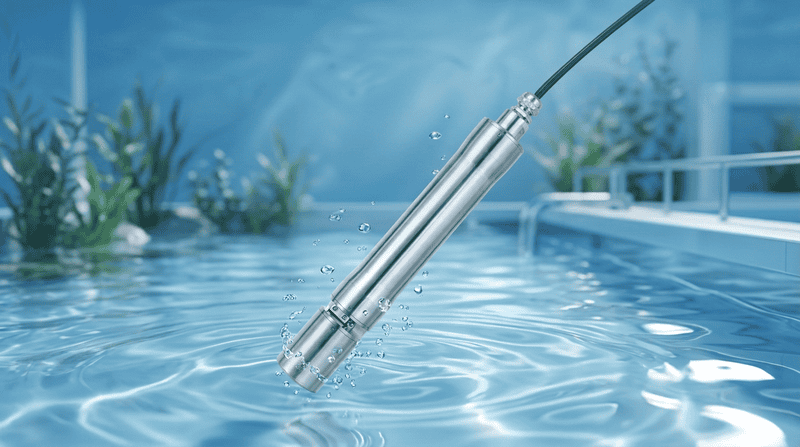
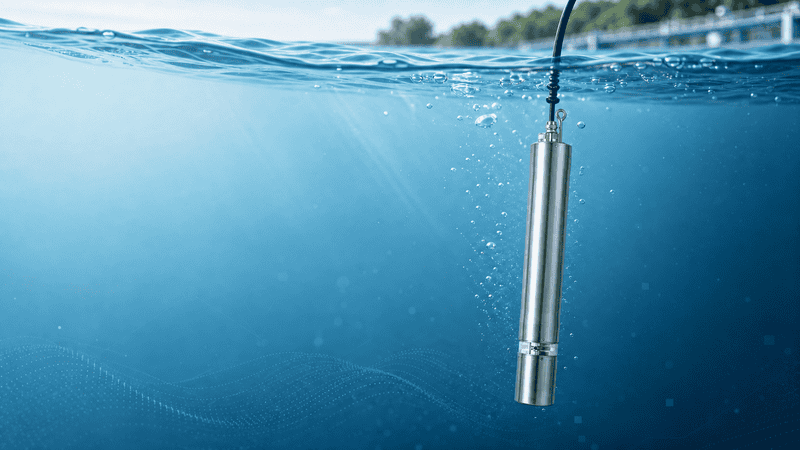
Googolwater offers rugged optical dissolved oxygen sensors built for continuous field use. Importantly, all models use fluorescence quenching, which means no membrane, no fill solution, and minimal maintenance.
Optical Dissolved Oxygen Sensor
Fluorescence quenching probe with RS485 Modbus output. IP68, 0–20 mg/L range, ±0.3 mg/L accuracy. Self-cleaning auto wiper. Best for wastewater aeration control and aquaculture.
View Product →5.1 Key Specifications
| Specification | Optical DO Sensor |
|---|---|
| Principle | Fluorescence quenching |
| DO range | 0–20 mg/L |
| Accuracy | ±0.3 mg/L |
| Response time | < 10 sec |
| Output | RS485 Modbus |
| Protection | IP68 |
| Self-cleaning | Auto wiper |
6. DO Sensor Guide: Installation Best Practices
6.1 Mounting Location
- First, install the dissolved oxygen sensor in a well-mixed zone. Otherwise, dead zones give readings that do not reflect the real process.
- Next, keep the sensor at least 30 cm below the water surface to avoid surface films and temperature swings.
- Then, place it away from aerator bubbles. Otherwise, bursting bubbles can cause noisy readings and rapid value swings.
- Finally, for pipeline work, use a flow-through cell to keep water moving gently past the sensor tip.
6.2 Calibration Protocol
- Zero point: First, use a sodium sulfite solution to create a zero-DO reference. This checks the sensor at the low end.
- Air saturation: Next, place the sensor in air-saturated water at a known temperature, or use water-saturated air. Then, the meter should read 100% saturation after temperature and pressure correction.
- Field check: Finally, compare the sensor against a portable meter or lab Winkler titration monthly. For details on the reference method, see Standard Methods 4500-O.
6.3 Maintenance Schedule
| Interval | Task | Notes |
|---|---|---|
| Weekly | Visual check of optical cap and wiper | Clean with soft cloth if algae or film builds up |
| Monthly | Single-point air-saturation check | Verify temperature and barometric pressure |
| Quarterly | Two-point calibration (zero + span) | Use fresh standard solutions |
| Annually | Replace optical sensing cap | Cap life is 1–2 years depending on UV exposure |
7. DO Monitoring Applications
7.1 Wastewater Aeration Control
Specifically, the single largest energy cost at an activated sludge plant is aeration — usually 50–60% of total electricity. In response, real-time DO monitoring at multiple points in the aeration basin lets operators match blower output to actual demand. As a result, plants often save 15–30% on energy while keeping biomass healthy.
Furthermore, modern control systems can close the loop automatically. For instance, a DO sensor sends data to a PLC, which adjusts variable-speed blowers in real time. Therefore, the plant no longer over-aerates during low-load periods or under-aerates during peak flows.
7.2 Aquaculture Water Quality
To illustrate, in fish and shrimp farming, DO can crash overnight when photosynthesis stops and respiration continues. Clearly, a reliable dissolved oxygen sensor with alarms gives farmers time to start backup aerators before losses occur. For best results, place sensors at the deepest point and near the outlet.
In addition, many farms use multiple sensors across ponds to map DO gradients. Specifically, this helps identify problem areas and balance aerator placement. As a result, feed conversion rates improve and mortality drops.
7.3 Environmental River and Lake Monitoring
Likewise, environmental agencies use DO as a key indicator of ecosystem health. In particular, low DO often signals organic pollution, nutrient overload, or thermal stress. Moreover, continuous monitoring stations upload data to public dashboards, helping regulators spot problems early. For example, the USGS Water Resources program is a leading example of large-scale DO monitoring networks.
8. DO, BOD, and COD: How They Work Together
Dissolved oxygen is closely linked to both BOD and COD. In simple terms, BOD and COD measure the demand side — how much oxygen organic pollution will consume — while DO measures the supply side — how much oxygen is actually available. Therefore, this DO sensor guide helps you understand all three parameters together.
| Parameter | What It Tells You | Typical Use |
|---|---|---|
| DO | Oxygen available right now | Real-time aeration control; fish health |
| BOD | Oxygen demand from biodegradable organics | Regulatory compliance; 5-day test |
| COD | Total oxygen demand from all organics | Rapid process control |
9. DO Sensor Guide: Frequently Asked Questions
9.1 Dissolved Oxygen Sensor Performance and Accuracy
Q1: How accurate is an optical dissolved oxygen sensor?
Specifically, a high-quality optical dissolved oxygen sensor typically achieves ±0.1–0.3 mg/L accuracy in the 0–20 mg/L range after proper calibration. Furthermore, optical sensors drift less than electrochemical sensors because they have no membrane or fill solution to degrade. Therefore, for most process control and environmental tasks, this level of accuracy is fully adequate.
Q2: How often should I calibrate a DO sensor?
For optical sensors, a single-point air-saturation check every 1–3 months is usually enough. In addition, a full two-point calibration (zero + span) is recommended quarterly. By comparison, electrochemical sensors often need weekly calibration in demanding wastewater environments. Above all, always follow the manufacturer guide for your specific model.
Q3: Can a dissolved oxygen sensor work in salt water?
Yes, but the sensor must correct for salinity. Specifically, salt reduces oxygen solubility, so a reading of 8 mg/L in fresh water might equal only 6.5 mg/L in seawater at the same temperature and pressure. Fortunately, modern dissolved oxygen sensors let you enter salinity manually or receive it from a conductivity probe automatically.
9.2 Dissolved Oxygen Sensor Deployment and Maintenance
Q4: Why does my DO sensor read high near aerators?
Basically, bubbles from diffusers or surface aerators are pure oxygen or air. If the sensor tip is inside a bubble, it can read 100% saturation or higher for a few seconds. To fix this, move the sensor to a zone where bubbles have mixed into the liquid but are not bursting directly on the sensor cap.
Q5: What is the lifespan of an optical DO sensing cap?
Generally, most optical caps last 1–2 years in normal conditions. However, strong UV exposure, high temperature, and aggressive cleaning can shorten life. In addition, caps exposed to hydrogen sulfide or solvents may degrade faster. Therefore, replace the cap when calibration drift exceeds the manufacturer limit.
Q6: What output signal does a Googolwater DO sensor provide?
Specifically, Googolwater dissolved oxygen sensors output RS485 Modbus RTU as standard. As a result, this lets you connect directly to PLCs, SCADA systems, and IoT gateways. Moreover, the sensor is plug-and-play with most industrial controllers and data loggers.
Need help choosing a dissolved oxygen sensor?
In short, tell us about your application — wastewater, aquaculture, or environmental monitoring — and our team will recommend the right DO sensor, calibration plan, and mounting setup.
Get a Free Technical Consultation10. Related Resources
- COD Sensor Monitoring Guide — Complete guide to chemical oxygen demand measurement
- BOD Sensor Monitoring Guide — Biochemical oxygen demand and online monitoring
- Water Quality Sensor Selection Guide — Full parameter comparison matrix
- Optical Water Quality Sensor: Complete Guide — Principles of UV-Vis and fluorescence sensors
- Wastewater Treatment Sensor Selection Guide — Application-specific recommendations