POME Monitoring: Sensor Selection for Palm Oil Mills
October 29, 2026
Multi-Channel Data Logger Buying Guide: Channels, Protocols and Power
Ask five vendors how many channels their multi-channel data logger has and you will get five numbers that cannot be compared. One counts sensor ports, another counts parameters, a third counts every analogue input and digital point as a channel. The number looks like a specification; in practice it is a marketing choice. This guide shows how to count channels the way an engineer does, which protocols decide compatibility, and why power and buffering usually decide whether a station still works in month six.
- What “multi-channel” actually counts
- Counting channels the way an engineer does
- Protocols: Modbus RTU on the sensor side, HTTP or MQTT upstream
- Power: where remote sites actually fail
- Display or headless?
- Storage, buffering and what happens when the link drops
- Weather station and environmental stations
- The ten-question buying checklist
- Shortlist by site type
- What the fifth year costs
01What “multi-channel” actually counts
Four different things get called a channel in this market, and every pricing argument comes from mixing them up.
- Physical sensor port. One RS485 line, one sensor. Four RS485 inputs means four sensors, regardless of how many parameters each one reports.
- Parameter. A multi-parameter probe reporting pH, dissolved oxygen, turbidity and temperature over a single port occupies one port and produces four parameters. Vendors that count parameters can advertise “eleven channels” on a device with three ports.
- Analogue input. A 4–20 mA or 0–10 V loop from an existing transmitter. These are separate hardware channels and usually need an optional module.
- Digital I/O. Relay-style inputs and outputs for floats, door switches and alarm contacts.
02Counting channels the way an engineer does
Start from the sensor list, not from the logger. Write down every instrument, then mark how each one connects.
| Instrument | Connection | Channels consumed |
|---|---|---|
| Multi-parameter water quality probe (pH, DO, turbidity, temperature) | RS485, Modbus RTU | 1 port, 4 parameters |
| Ammonia ISE sensor | RS485, Modbus RTU | 1 port |
| Legacy turbidity transmitter | 4–20 mA | 1 analogue channel |
| Flow meter with pulse output | Digital input | 1 digital input |
| Alarm beacon | Relay output | 1 digital output |
Choosing a multi-channel data logger for that list is simple: it fits a four-port unit with one analogue channel and a pair of digital points — no expansion needed. Add a second multi-parameter probe and a weather sensor set, and the port count is what runs out first, not the parameter count. This is why the honest question to a vendor is “how many sensor lines can I connect, and what does each expansion port give me?”
03Protocols: Modbus RTU on the sensor side, HTTP or MQTT upstream
Almost every industrial water quality sensor in this market speaks Modbus RTU over RS485, and that is the protocol your multi-channel data logger must handle without argument. Two details matter more than the spec sheet line item:
- A register map you can read. Without it, integration becomes a support ticket per sensor. Ask for the register table before you buy, not after.
- Per-port isolation and addressing. Four ports let you keep four sensor families apart; a single port with a bus of eight devices is cheaper and much harder to debug.
Upstream is a separate decision. HTTP suits dashboards and REST endpoints you already own; MQTT suits a broker where many stations publish into one topic tree. Devices that support both leave the decision reversible — see the Modbus background if you need a protocol refresher.
04Power: where remote sites actually fail
Power is the least interesting column on a multi-channel data logger datasheet and the most common cause of a dead station. Three patterns cover most projects:
- Mains with a DC supply. A panel room with 100–240 VAC available; the logger runs on its DC input and the enclosure stays cool.
- External DC from a solar regulator. The logger sees 12–24 V DC and does not care where it came from — but the regulator, battery and panel must be sized for the logger’s own consumption plus the sensors’.
- Internal battery. Battery variants keep a station alive through a mains failure or run it where no cable exists, and local storage means an outage does not lose the record.
Heat is part of the power story. An IP65 enclosure in direct sun can sit far above ambient, and a logger rated for −20 to 70 °C will still have a storage limit that punishes an unshaded cabinet. Mount in shade, or provide a sun shield.
05Display or headless?
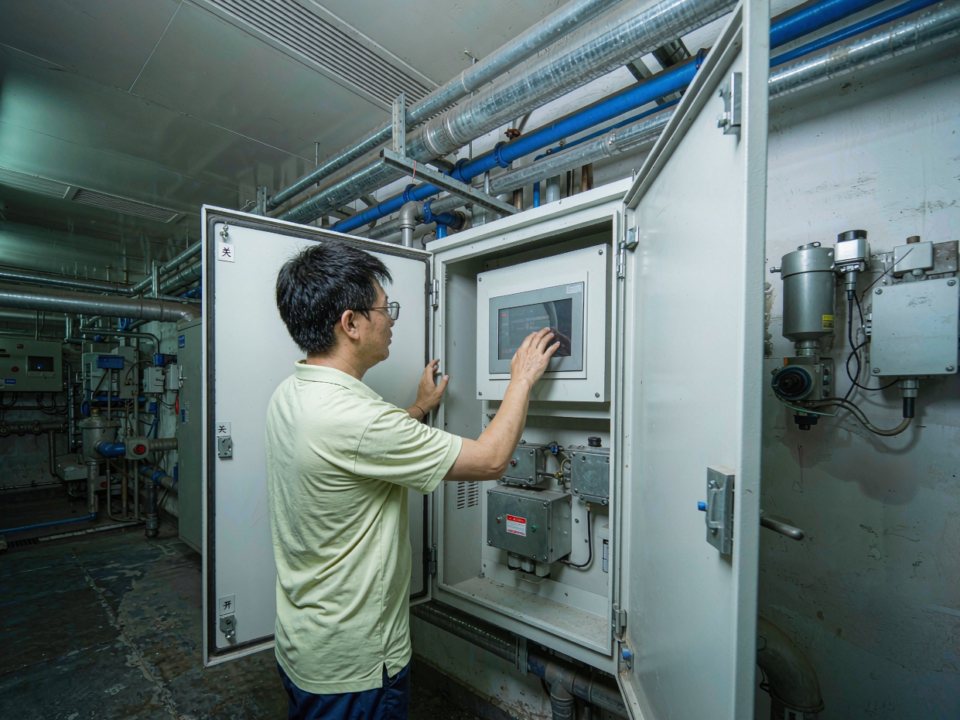
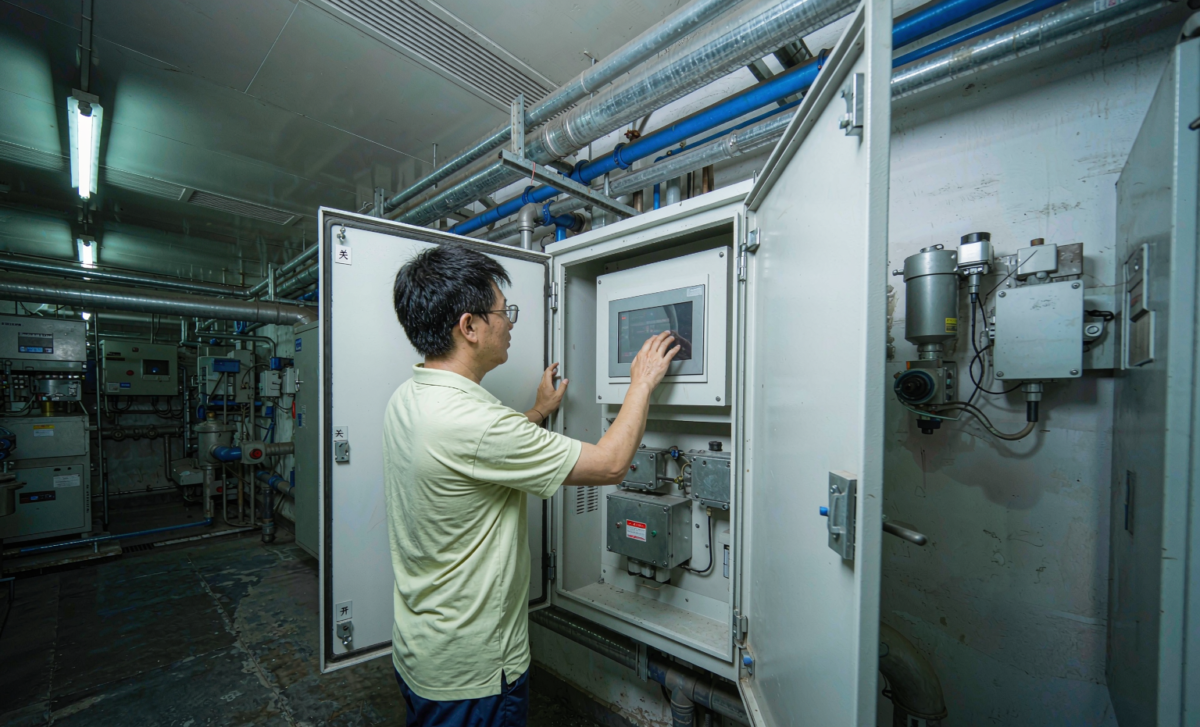
This is the choice that changes daily life on site. A logger with a touch panel lets an operator read trends, run a calibration and change a parameter without a laptop — worth paying for in a plant room where somebody walks past twice a day. A headless logger with status indicators only is smaller, cheaper and fine where the station is visited monthly and the data lives in a dashboard.
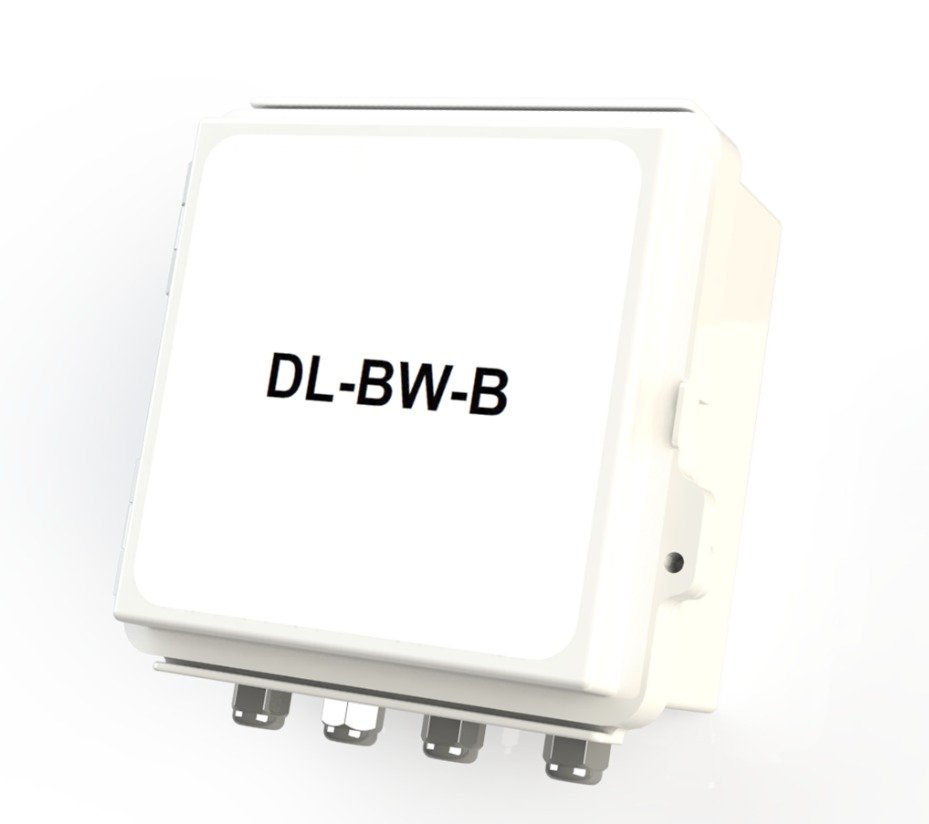
Our own range splits along that line: the multi-channel data logger pairs four RS485 inputs with a 7-inch touch panel, while the battery-powered water quality data logger is built for headless remote sites with battery variants and 4G upload.
06Storage, buffering and what happens when the link drops
Every logger in this class stores locally; the differences are capacity, medium and behaviour during an outage.
- Capacity: 32 GB is the current default in both internal storage and TF-card designs — enough for years of multi-parameter data at typical logging intervals.
- Buffering: when the uplink drops, a good logger keeps writing to local storage and back-fills on reconnection. Test this before you deploy, not during your first network incident.
- Retention policy: decide who clears the card and when. Nobody wants to discover a full card during a compliance review.
07Weather station and environmental stations
Weather stations are the classic multi-channel application: several sensors, one mast, no mains, nobody on site. The selection logic is the same one described above, with three additions.
- Mixed protocols are normal. A station may combine Modbus water sensors with analogue meteorological instruments — count both before choosing.
- Power budget is tighter. Wind and solar sensors, a heated rain gauge and a 4G modem all compete for the same battery. Size the panel for the darkest month, not the best one.
- Enclosure and cabling decide reliability. Salt air, UV and rodents destroy more stations than electronics do.
If your weather station instruments output Modbus RTU or 4–20 mA, a water quality data logger will handle them on the same record as the water sensors. If they speak something proprietary, the converter decision comes first.
08The ten-question multi-channel data logger checklist
- How many physical sensor ports, and are they independent?
- What does each expansion port add — analogue, I/O, or more RS485?
- Can I see the full register map before purchase?
- Which uplink protocols are supported, and can I point them at my own server?
- How is data handled during a 24-hour network outage?
- Which power input range, consumption and battery options are available?
- What is the operating temperature range, and the storage range?
- How is the device configured on site — panel, app, or browser?
- What is the IP rating, and what mounting does the manual specify?
- What is the warranty, and who answers the phone in year two?
09Shortlist by site type
| Site type | What matters most | Configuration to look for |
|---|---|---|
| Plant room or pump station | On-site reading, calibration, trends | Touch panel, 4 × RS485, mains DC supply |
| Remote pond, river or reservoir | Battery life, buffering, uplink | Battery variant, 4 × RS485, 4G with local storage |
| Weather or environmental station | Mixed protocols, power budget | RS485 plus analogue inputs, shaded enclosure |
| Industrial outfall | Analogue retrofit, alarm contacts | 4–20 mA channel, digital I/O, RS485 output to PLC |
| Compliance monitoring point | Record integrity, audit trail | Local storage, timestamped export, redundant path |
10What the fifth year costs
The purchase price of a multi-channel data logger is the smallest line in the budget. SIM data plans, enclosure maintenance, sensor recalibration and the labour to visit the site all compound, and the cheapest logger usually wins the tender and loses the budget review. Our five-year cost comparison sets out the line items to model, and the sensor selection guide covers the probe side of the same decision.
Frequently asked questions
How many channels do I need?
For a multi-channel data logger, count sensors, not parameters. One port per Modbus sensor, one analogue channel per 4–20 mA or 0–10 V instrument, one digital point per switch or relay. Add one spare port if you expect to expand within two years.
What is the difference between a channel and a parameter?
A channel is a physical connection; a parameter is a measurement. A four-parameter probe uses one channel and reports four parameters. Vendors that advertise channels as parameters inflate the number.
Can a Modbus logger read SDI-12 sensors?
Not directly. SDI-12 is a different electrical and protocol standard, so it needs a converter. Confirm the protocol of every sensor before shortlisting hardware.
Do I need a display?
Only if people work at the device — reading trends, calibrating, changing settings. Remote stations are usually better served by a headless logger with status indicators and a dashboard.
Can a data logger run from a solar panel?
Yes, if the logger accepts a DC input in the range your regulator supplies and the panel and battery are sized for the total load, including sensors and the modem. Check the operating and storage temperature limits for the enclosure.
What happens to my data when 4G drops?
On a properly designed logger, nothing is lost — readings continue into local storage and back-fill when the link returns. Ask the vendor to demonstrate this behaviour rather than describe it.
Comparing the two Googolwater units side by side — port count, panel, power and enclosure — see the water quality transmitter and data logger comparison.
Send us your sensor list
Tell us the instruments, the site and the power situation. We will come back with a port count, a module configuration and the wiring diagram — talk to our engineering team.