Hach Alternative: Direct Manufacturer Compared
October 28, 2026
POME Monitoring: Sensor Selection for Palm Oil Mills
October 29, 2026
Aquaculture Water Quality Monitoring: A Sensor Guide for RAS, Ponds and Shrimp Farming
Aquaculture water quality monitoring decides farm economics more than any other input: a single night of dissolved oxygen collapse can wipe out a season, and chronic sub-lethal ammonia quietly suppresses growth long before fish look sick. As the FAO’s global aquaculture overview makes clear, water quality is the production factor that limits everything else. This guide covers what to monitor in the three main culture systems — recirculating aquaculture systems (RAS), earthen ponds and shrimp ponds — which sensor technology survives each environment, and how to deploy instruments so the data keeps flowing after the installer leaves.
Why aquaculture is the harshest monitoring environment
Aquaculture water combines the worst properties of every application: warm water (accelerates biofouling and sensor drift), high organic load (feeds the biofilm), animals that are harmed by exactly the parameters that fluctuate fastest, and sites that are often unmanned overnight — precisely when dissolved oxygen crashes. A sensor that performs well in a clean river can be blind within two weeks in a shrimp pond. Technology choice and maintenance design are therefore not procurement details; they are the monitoring program.
The parameters that matter in aquaculture water quality monitoring
| Parameter | Why it matters | Typical target range* | Failure mode if unmonitored |
|---|---|---|---|
| Dissolved oxygen | The parameter that kills fastest. Nighttime respiration plus algal swings make DO the most volatile reading in the pond. | > 5 mg/L for most finfish; shrimp tolerate lower but grow slower | Nighttime hypoxia, mass mortality at dawn |
| Temperature | Controls metabolism, feeding rate and — critically — the NH₃/NH₄⁺ equilibrium. | Species-specific (e.g. ~28–32 °C for tilapia and shrimp) | Slower growth; misread ammonia toxicity |
| pH | Determines the toxic free-ammonia fraction; algal photosynthesis drives large daily pH swings. | 7.5–8.5 (ponds); stable in RAS | Afternoon pH spike can turn “safe” TAN toxic |
| Total ammonia nitrogen (TAN) | Feed conversion becomes ammonia. Chronic TAN suppresses growth and immunity. | TAN < 1 mg/L; free NH₃ < 0.02 mg/L | Chronic gill damage, poor FCR, disease outbreaks |
| Nitrite (NO₂⁻) | Intermediate of nitrification; toxic to fish blood (brown blood disease), especially in new RAS biofilters. | < 1 mg/L (hardwater systems can tolerate more with chloride) | Methemoglobinemia in RAS startup |
| Salinity / EC | Affects species physiology and oxygen solubility; key in brackish shrimp farming. | Species-specific | Osmotic stress, wrong oxygen solubility correction |
| ORP | Redox trend indicates biofilter health and sludge-zone anaerobia in RAS. | Trend value; absolute ranges are system-specific | Hidden anaerobic zones in sediment |
| Turbidity / TSS | Proxy for algal density (green water management) and solids loading in RAS. | Site-specific trend | Algae crash or filter overload goes unseen |
*Ranges are common industry practice; always defer to your species, stocking density and local extension service guidance.
System-by-system sensor selection
RAS (recirculating aquaculture systems)
RAS is the most instrument-friendly environment: water is piped, accessible and relatively clean after solids removal. Deploy inline sensors in the process loop — optical DO in the culture tank or oxygen cone outlet, pH and EC in the loop, ORP across the biofilter, and temperature everywhere it matters. Optical DO is the clear default in RAS: no membrane to service inside a closed system, and flow independence means placement is flexible. ISE ammonium sensors work well in RAS because solids removal protects the cartridge. In short, RAS is where aquaculture water quality monitoring can be as precise as the system itself.
Earthen finfish ponds
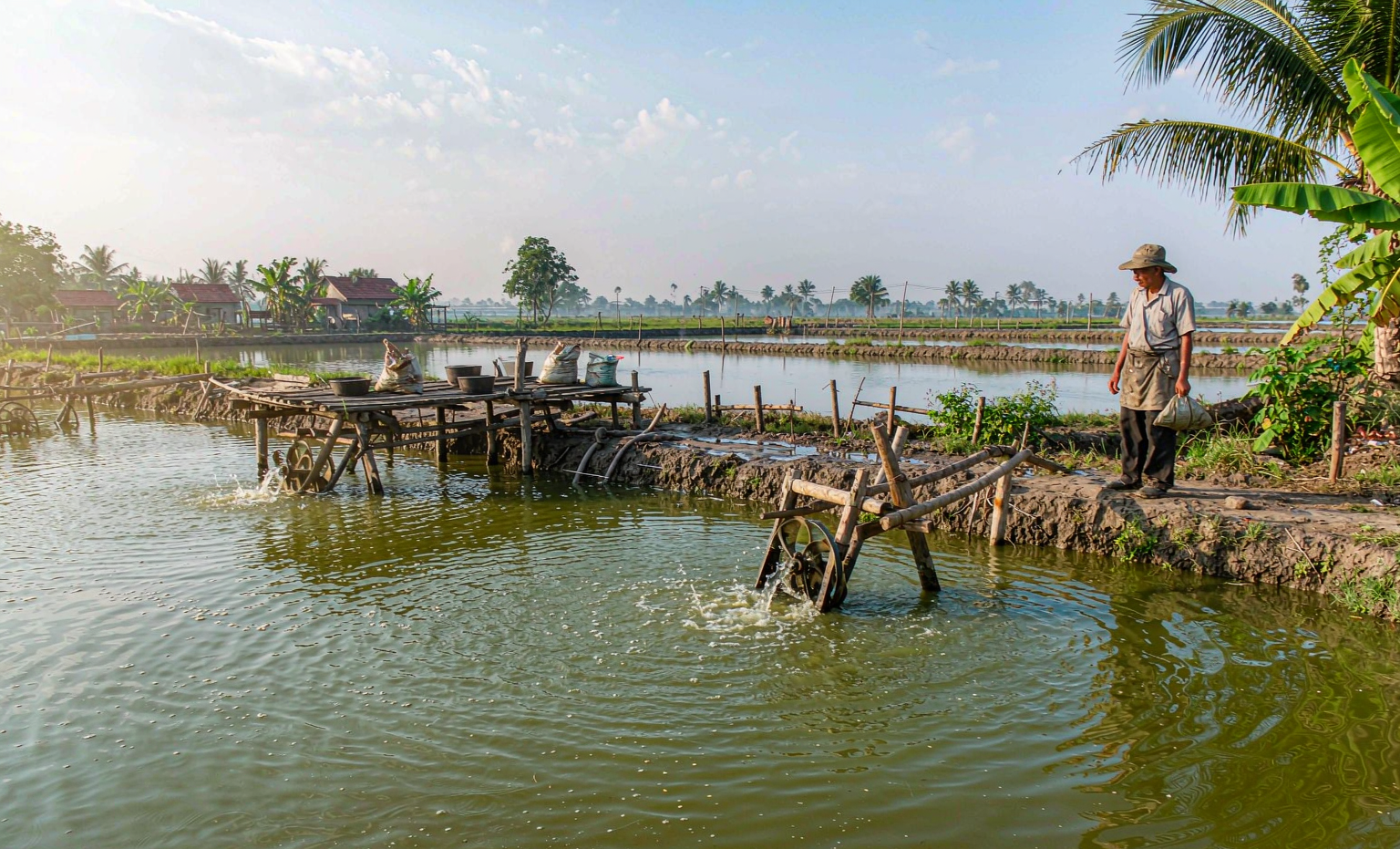
Ponds need fewer parameters but the toughest hardware: an optical DO sensor on a floating buoy or a standpipe mount, with automatic wiper cleaning. Nighttime aeration control based on a real DO trend (not a schedule) saves both power and fish. A single well-placed DO probe with alarm outputs outperforms three neglected handheld meters. This is aquaculture water quality monitoring at its most valuable: one trend, one alarm, one rescue.
Shrimp ponds
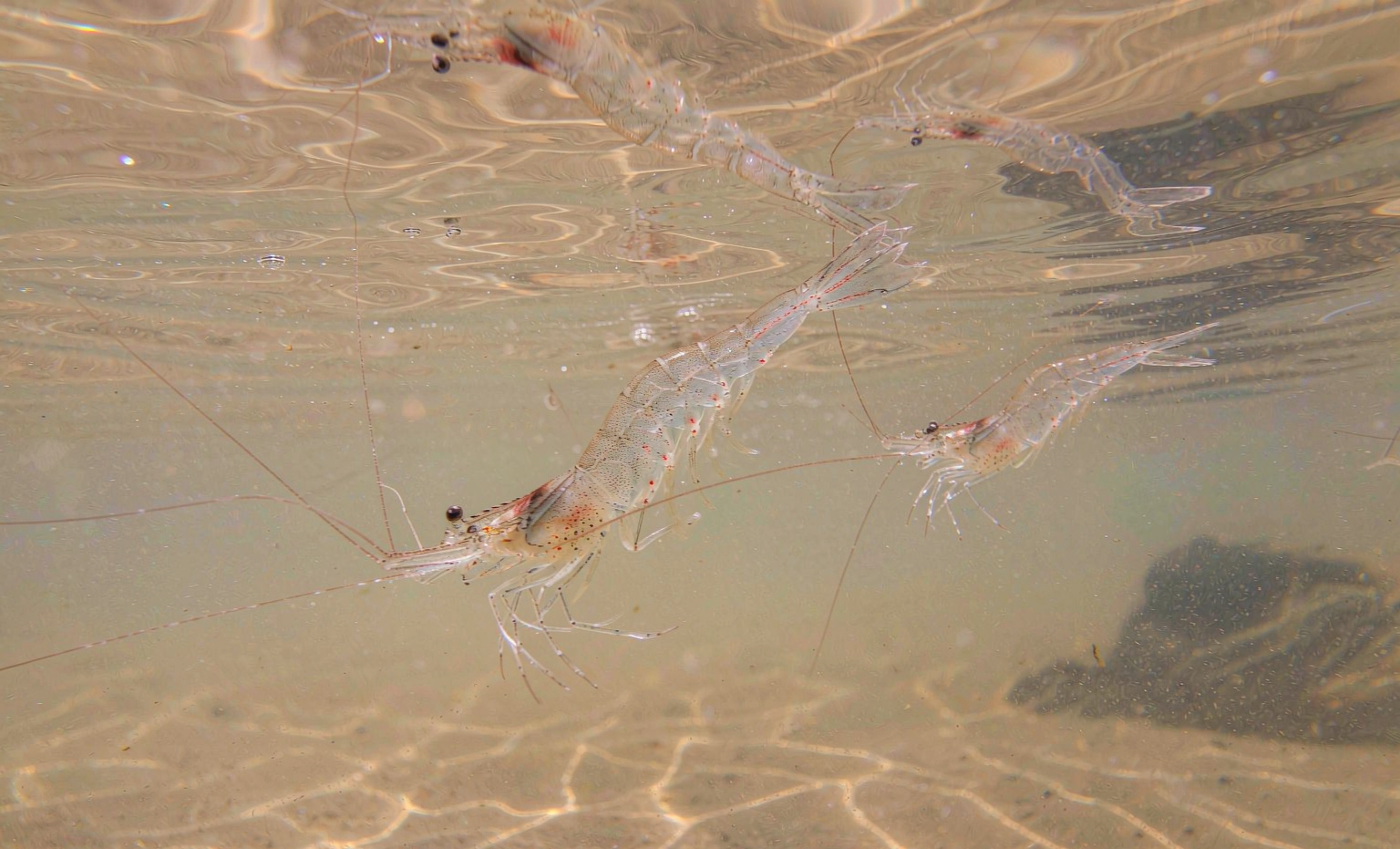
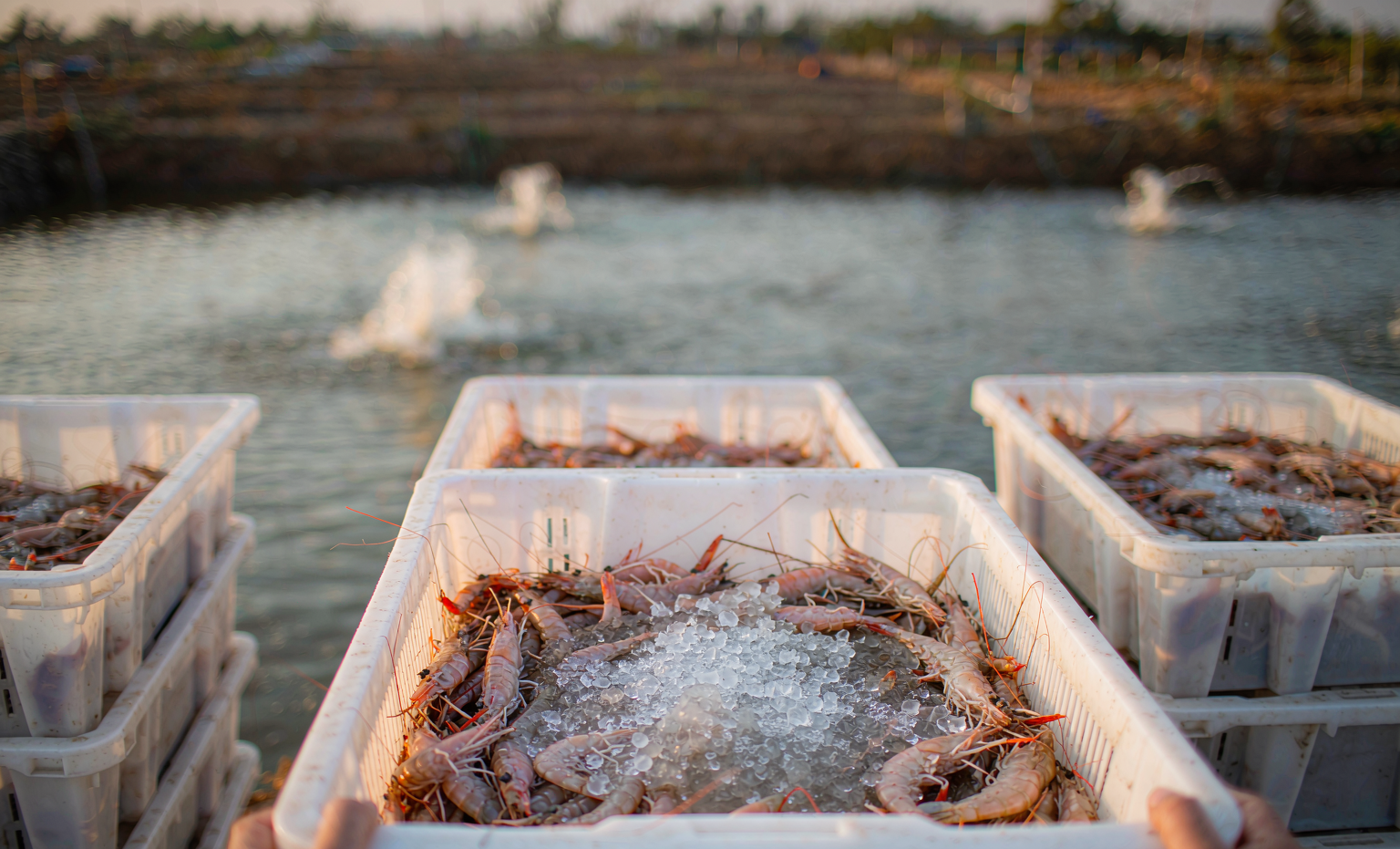
Shrimp ponds are the hardest: warm, brackish, heavily fed and biofouled. Specify optical DO with a wiper as the baseline, add pH and salinity, and mount sensors where the paddlewheel current passes so the reading represents the pond, not a stagnation pocket. In intensive systems, multi-parameter sonde on a buoy with a data logger and remote alarm is the standard architecture. Getting shrimp-farm aquaculture water quality monitoring right is what separates a 100-day crop from a 120-day one.
| Parameter | Recommended technology | Reason |
|---|---|---|
| Dissolved oxygen | Optical (luminescence), wiper-equipped | No membrane/electrolyte to service; flow-independent; survives fouling with a wiper |
| Ammonia | ISE (TAN) + pH + temperature → free NH₃ calculation | Direct NH₃ gas sensors exist but are expensive; the calculation route is robust and auditable |
| pH | Gel-filled industrial electrode, automatic cleaning | Standard chemistry; keep spare electrodes on site |
| Salinity | Conductivity (EC) cell | Stable, low-maintenance, doubles as TDS/salinity |
| ORP | Platinum band electrode | Trend monitoring for biofilter and sediment health |
| Nitrate / Nitrite | Laboratory checks + ISE nitrate online in RAS | Nitrite is a startup problem; nitrate accumulates slowly |
Deployment and power
Every choice below serves one goal: aquaculture water quality monitoring data that is still trustworthy in month six.
- Mounting: floating buoy for ponds (reading follows the water column); inline ball-valve insertion for RAS loops; never mount in a dead corner.
- Position: place the DO sensor where the aeration current mixes — the worst-case zone, not the best-case one.
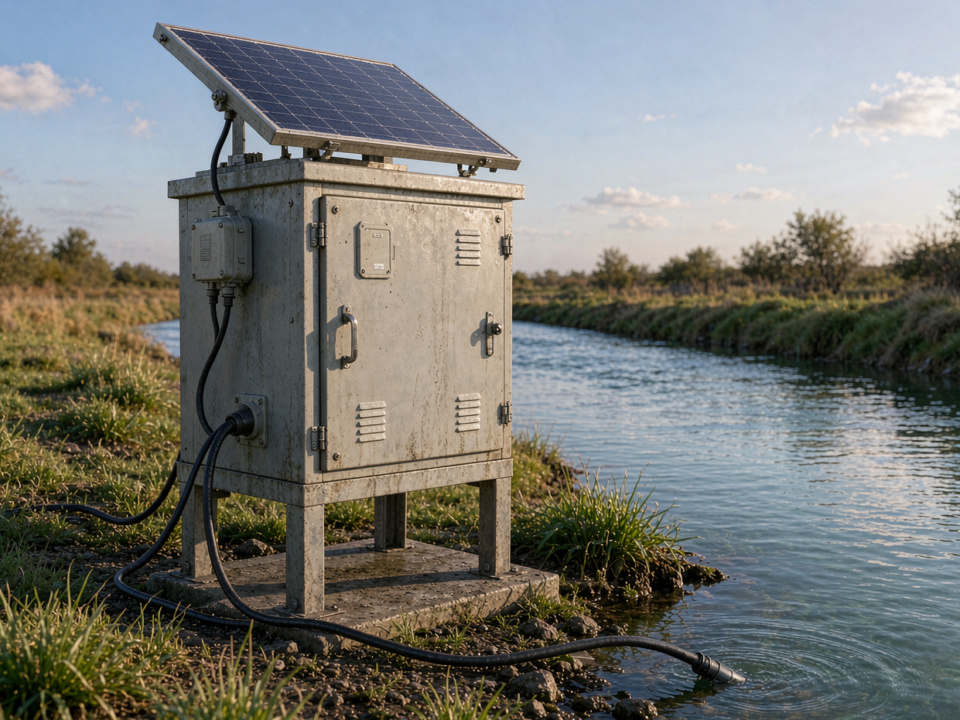
- Power: solar panel + battery + 4G logger is now the default for remote ponds; ensure the logger buffers data during connectivity gaps.
- Alarms: configure low-DO alarms with a rate-of-change trigger, not just a threshold — a fast fall at 6 mg/L at 22:00 is more urgent than a stable 4 mg/L in a system designed for it.
- Calibration rhythm: verify DO against a handheld monthly (or after any fouling event); log cap expiry dates; keep pH electrodes in storage solution, never dry.
Common failure patterns (and how to avoid them)
Most of these are data failures — and most data failures are aquaculture water quality monitoring design failures, not sensor defects.
| Symptom | Likely cause | Prevention |
|---|---|---|
| DO reading drifts down over weeks | Biofilm on the optical cap | Wiper cleaning + manual check; shorten interval in warm months |
| Ammonia “spike” every afternoon | pH-driven free-ammonia fraction, not a real TAN spike | Log pH + temperature; evaluate free NH₃, not raw TAN |
| pH electrode dies every 2–3 months | Dried out between services, or abraded by suspended solids | Keep cap filled with storage solution; choose gel industrial electrode |
| Logger data gaps at night | Solar battery undersized | Size battery for 3+ cloudy days; check charge controller logs |
| Sensor reads fine but fish still stressed | Sensor is in a mixed zone; the stress is in a stratified corner | Move sensor to worst-case zone or add a second point |
From monitoring to RFQ
When you request a quotation, specify: culture species and system, stocking density, water volume, power availability, alarm requirements (SMS? PLC relay?) and who performs maintenance. A supplier who does not ask these questions is selling a probe, not a monitoring program. Our ISE ammonia sensor and optical DO sensor are both designed for long unattended deployments, and the knowledge base covers the measurement fundamentals behind every parameter above.
Planning a pond, RAS or shrimp farm monitoring system?
Send us your species, system layout and power situation. We will return a parameter-to-sensor mapping, a deployment drawing and an alarm logic proposal — not just a price list.