Wastewater Treatment Sensor Selection Guide | 2026 Best Practices
April 21, 2026
Optical Water Sensor: Choosing the Right Technology
May 22, 2026
Industrial Process Water Quality Monitoring: Complete Guide 2026
Expert guide to sensor selection, key parameters, installation best practices, and compliance for industrial water systems. Based on 20,000+ sensor deployments across 20+ countries.
Industrial water quality monitoring is essential for operational efficiency, regulatory compliance, and equipment protection in manufacturing plants, power stations, and chemical facilities. In manufacturing plants, power stations, and chemical facilities, water quality directly affects product quality and system reliability. Therefore, selecting the right monitoring system is a critical engineering decision.
At Googolwater, we have deployed over 20,000 sensors in industrial facilities across 20+ countries. Consequently, we understand the unique challenges of process water monitoring. This guide covers sensor selection, key parameters, installation best practices, and compliance considerations for industrial applications.
Furthermore, we will share practical insights from our field experience. By the end, you will know exactly which monitoring solution fits your process.
Why Industrial Water Quality Monitoring Matters
Industrial water systems serve many functions. They provide cooling, transport heat, generate steam, and carry process streams. However, poor water quality causes serious problems:
- Scaling and fouling reduce heat transfer efficiency in heat exchangers and boilers
- Corrosion damages piping, pumps, and process equipment
- Microbiological growth clogs membranes and cooling towers
- Product contamination results from poor process water quality
- Regulatory violations lead to fines and operational shutdowns
Real-time water quality monitoring detects these issues early. As a result, plants can take corrective action before damage occurs. Moreover, continuous data enables process optimization and reduces chemical consumption.
Key Parameters for Industrial Water Quality Monitoring
Cooling Water Systems
Cooling water systems are the largest water consumers in most industrial facilities. Key monitoring parameters include:
| Parameter | Purpose | Typical Range |
|---|---|---|
| Conductivity / TDS | Monitor scaling potential and cycle of concentration | 50–2,000 µS/cm |
| pH | Control corrosion and scaling | 6.5–8.5 |
| ORP | Monitor biocide effectiveness | +200 to +800 mV |
| Turbidity | Detect fouling and suspended solids | 0–20 NTU |
| Free Chlorine | Control microbial growth | 0.2–2.0 mg/L |
| Temperature | Monitor system efficiency | Process dependent |
- Use inline conductivity sensors with automatic temperature compensation
- Select pH sensors with reference junction protection for high-chlorine water
- Install turbidity sensors in recirculating loops with representative flow
Boiler Feed Water
Boiler systems require extremely high water purity. Even trace impurities cause serious problems at high temperature and pressure.
| Parameter | Purpose | Typical Range |
|---|---|---|
| Conductivity | Monitor feed water purity | <0.1–10 µS/cm |
| pH | Control acid/alkaline corrosion | 8.5–9.5 (conditioned) |
| Dissolved Oxygen | Prevent oxygen corrosion | <7 ppb (deaerated) |
| Silica | Prevent turbine blade deposition | <0.02–0.5 mg/L |
| Hardness | Prevent scale formation | 0–2 mg/L as CaCO₃ |
| Sodium | Detect condenser leaks | <10 ppb |
- Use high-purity conductivity sensors (electrodeless / toroidal) for boiler feed
- Install dissolved oxygen sensors downstream of deaerators
- Select silica analyzers with automatic sample dilution for high-range measurement
Industrial Wastewater Discharge
Plants must monitor effluent quality before discharge to municipal systems or natural water bodies.
| Parameter | Regulatory Focus | Typical Limit |
|---|---|---|
| pH | Corrosion and aquatic life protection | 6–9 |
| COD / BOD | Organic pollution load | Varies by permit |
| Suspended Solids (TSS) | Visual impact and sedimentation | 30–100 mg/L |
| Ammonia-N | Toxicity to aquatic life | 1–10 mg/L |
| Total Nitrogen / Phosphorus | Eutrophication control | Varies by region |
| Heavy Metals | Toxicity (Pb, Cd, Cr, As, etc.) | ppb levels |
- Use UV absorption COD sensors for real-time organic load monitoring
- Install ammonia ion-selective electrodes for continuous nitrogen monitoring
- Select multi-parameter probes to reduce installation complexity
For continuous nitrogen monitoring in industrial effluent, see our Digital Ammonia Nitrogen ISE Sensor — reagent-free operation with automatic pH/temperature compensation for NPDES permit compliance.
Sensor Types for Industrial Water Quality Monitoring
Optical Sensors
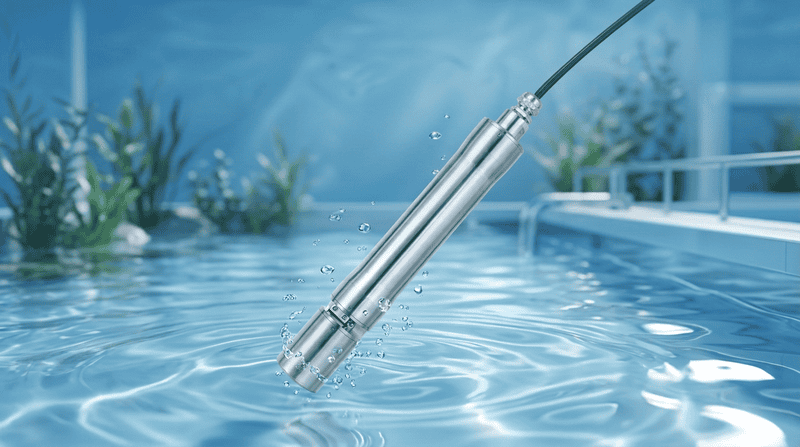
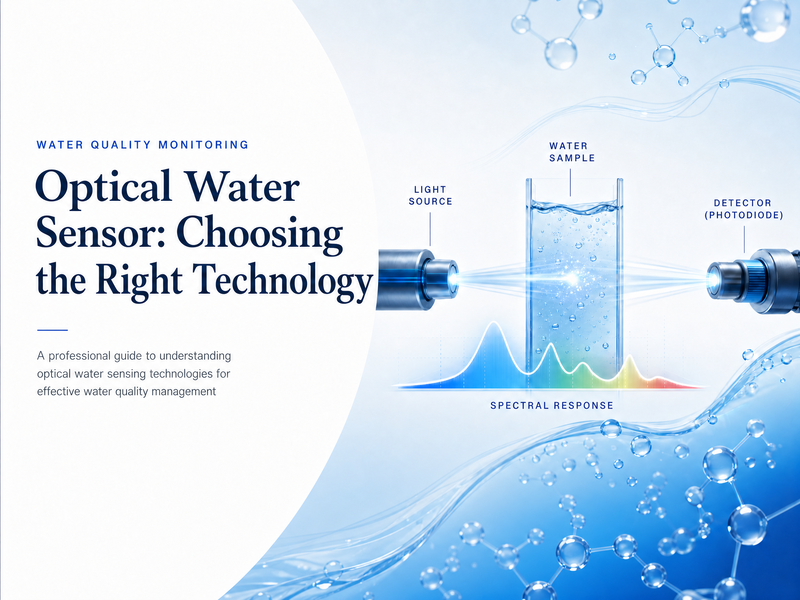
Optical sensors use light-based measurement principles. They are particularly valuable in industrial applications:
- No reagents required, reducing operating costs and chemical handling
- Minimal maintenance compared to wet chemistry analyzers
- Fast response time enables real-time process control
- Multi-parameter capability in a single probe
- COD and BOD monitoring in industrial effluent
- Turbidity and suspended solids in process water
- Nitrate monitoring in cooling water and effluent
Electrochemical Sensors
Electrochemical sensors measure ionic parameters through electrode reactions. They remain the workhorse of industrial water monitoring:
- pH and ORP for corrosion and disinfection control
- Conductivity for purity monitoring and scaling potential
- Ion-selective electrodes for specific ions (ammonia, nitrate, fluoride)
- Dissolved oxygen for boiler feed water and biological treatment
Online Analyzers vs. Sensors
| Technology | Pros | Cons | Best For |
|---|---|---|---|
| Optical Sensors | Low maintenance, multi-parameter | Higher upfront cost | Continuous monitoring, harsh environments |
| Electrochemical Sensors | Lower cost, proven technology | Higher maintenance, drift | General purpose, budget-sensitive projects |
| Wet Chemistry Analyzers | High accuracy, regulatory acceptance | High maintenance, reagents | Compliance reporting, low-frequency measurement |
Installation Best Practices for Industrial Sites
Location Selection
Proper sensor location is critical for representative measurement:
- Sample after pretreatment where possible (filters, softeners)
- Avoid dead legs and stagnant zones in piping
- Install in bypass loops to maintain representative flow without disrupting process
- Consider access for maintenance — sensors in hard-to-reach locations get neglected
Sampling Systems
Industrial process water often contains debris, air bubbles, or extreme temperatures. A proper sampling system protects the sensor:
- Pressure regulation — reduce process pressure to sensor operating range
- Temperature conditioning — cool hot process streams before sensor
- Particle filtration — protect optical windows and electrodes
- Air elimination — remove bubbles that interfere with optical measurements
- Flow control — maintain recommended flow velocity past sensor
Integration with Plant Control Systems
Modern plants use DCS or SCADA systems for centralized control. Sensor selection must consider integration requirements:
- 4-20mA outputs for simple integration with analog input cards
- Modbus RTU (RS485) for digital communication and diagnostics
- Modbus TCP / Ethernet for modern networked systems
- Wireless options for retrofit installations where cabling is difficult
For installations without DCS or SCADA, our multichannel data loggers provide cost-effective data capture with RS485 Modbus RTU and optional 4G cloud upload.
Regulatory Compliance for Industrial Water Monitoring
China Industrial Wastewater Standards (GB 8978-1996)
China has strengthened industrial discharge standards. Key parameters and typical limits:
| Parameter | Direct Discharge Limit | Indirect Discharge Limit |
|---|---|---|
| pH | 6–9 | 6–9 |
| COD | 50–100 mg/L | 150–300 mg/L |
| BOD₅ | 20–30 mg/L | 30–150 mg/L |
| Ammonia-N | 5–15 mg/L | 25–50 mg/L |
| TSS | <100 mg/L | 200–800 mg/L |
| Total Phosphorus | <0.5 mg/L | <1 mg/L |
*Note: Exact limits depend on industry type and receiving water body classification.
U.S. EPA and State Regulations
In the United States, industrial facilities are regulated through NPDES permits. Continuous monitoring may be required for:
- Flow — all major dischargers
- pH — continuous monitoring standard
- Temperature — many permits require continuous monitoring
- Specific parameters — depending on industry and receiving water sensitivity
European Industrial Emissions Directive (IED)
The IED sets BAT (Best Available Techniques) requirements for industrial emissions. Water monitoring requirements vary by industry sector but commonly include:
- Continuous pH and flow monitoring
- Regular sampling for priority substances
- Leak detection and inventory control for chemical plants
Common Mistakes in Industrial Water Monitoring
Treating All Process Streams the Same
Cooling water, boiler feed water, and effluent have completely different quality requirements. Using the same sensor type across all streams leads to poor performance. Instead, match sensor technology to each stream’s characteristics.
Ignoring Sample System Design
Even the best sensor fails if the sample system is poorly designed. High temperature, pressure, or particle load damages sensors quickly. Therefore, invest in a proper sampling system with filtration, cooling, and flow control.
Inadequate Maintenance Planning
Industrial sites are busy. Sensors get forgotten until they fail. Select sensors with low maintenance requirements (optical sensors) for hard-to-access locations. Furthermore, establish a preventive maintenance schedule and stick to it.
No Data Utilization Plan
Installing sensors without using the data is a wasted investment. Define how data will be used before selecting sensors:
- Process control — requires fast response and high reliability
- Trend monitoring — allows slower response but needs long-term stability
- Regulatory compliance — requires documented accuracy and calibration traceability
Case Study: Wastewater Treatment Plant Water Monitoring
1000t/d wastewater treatment plant, China
A 1000t/d wastewater treatment plant upgraded its water monitoring system. The plant faced two problems: (1) High electricity and maintenance costs, and (2) high chemical consumption
Previous Situation
- Manual Daily sampling for COD,Total Nitrogen and NH3-N
- No real-time data for chemical dosing control
Solution Implemented
- Inline Full spectrum water sensor with automatic temperature compensation
Results
This case demonstrates that proper industrial process water quality monitoring delivers measurable ROI through reduced maintenance and optimized chemical use.
Sensor Maintenance in Industrial Environments
Cleaning Strategies
| Fouling Type | Cause | Cleaning Method |
|---|---|---|
| Scaling (CaCO₃, CaSO₄) | Hard water, high temperature | Acid cleaning (citric or HCl) |
| Biological fouling | Microbial growth | Chlorine soak or enzymatic cleaner |
| Oil/grease | Process contamination | Detergent cleaning, isopropanol |
| Silica/silt | Surface water intake | Mechanical wiping + acid clean |
Calibration Frequency
| Sensor Type | Recommended Calibration | Field Check |
|---|---|---|
| pH | Monthly | Weekly (buffer check) |
| Conductivity | Quarterly | Monthly |
| Turbidity | Monthly | Weekly (visual check) |
| Dissolved Oxygen | Monthly | Weekly |
| COD/UV Sensors | Quarterly | Monthly (sample comparison) |
Spare Parts Planning
Industrial facilities cannot afford long downtimes. Maintain an inventory of:
- One spare sensor for each critical measurement point
- Calibration standards with known expiry dates
- Replacement membranes / O-rings for electrochemical sensors
- Cleaning supplies appropriate for local water chemistry
How to Select the Right Supplier for Industrial Projects
Industrial water monitoring projects have unique requirements. Select suppliers who understand industrial applications:
Technical Capabilities to Look For
- Industry-specific experience — power, chemical, pharmaceutical, food & beverage
- Sensor range covering all your parameters — avoid managing multiple vendors
- Integration engineering support — help with sampling system design and control system integration
- Local service capability — on-site support when problems occur
Questions to Ask Supplier References
- How long have the sensors operated without failure in similar applications?
- What is the typical calibration interval in actual plant conditions?
- How responsive is technical support for troubleshooting?
- Can the supplier provide integration drawings and configuration support?
Googolwater has deployed over 20,000 sensors in industrial facilities worldwide. Our optical multi-parameter sensors are specifically designed for harsh industrial environments. Moreover, our technical team provides application engineering support from initial selection through commissioning and ongoing operation.
FAQ: Industrial Process Water Quality Monitoring
Conclusion
Industrial process water quality monitoring is a critical investment for operational efficiency, equipment protection, and regulatory compliance. The right sensor selection starts with understanding your process water characteristics and defining how the data will be used.
Optical sensors offer advantages for organic monitoring and multi-parameter applications. Electrochemical sensors remain essential for pH, conductivity, and ion-specific measurements. The key is matching sensor technology to your specific process conditions.
Proper sampling system design is just as important as sensor selection. Protect sensors from extreme temperature, pressure, and particle load. Furthermore, plan for integration with your plant control system from the beginning.
Googolwater provides comprehensive industrial water quality monitoring solutions. Our product range covers all critical parameters for cooling water, boiler feed water, and industrial effluent monitoring. We offer application engineering support to help you select and install the right sensors for your process.
The right sensor selection starts with understanding your process water characteristics. Use our Water Quality Sensor Selection Guide to match parameters to sensor technologies across your entire plant.
Need Help Selecting Industrial Water Monitoring Sensors?
Contact our technical team for a personalized consultation. We can review your process conditions and recommend optimal monitoring solutions.
Contact Our Technical Team →