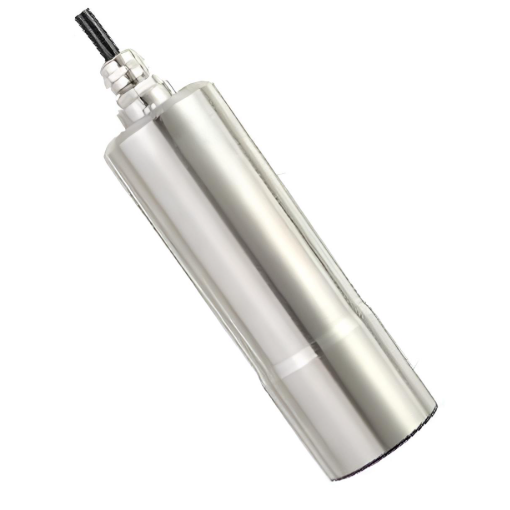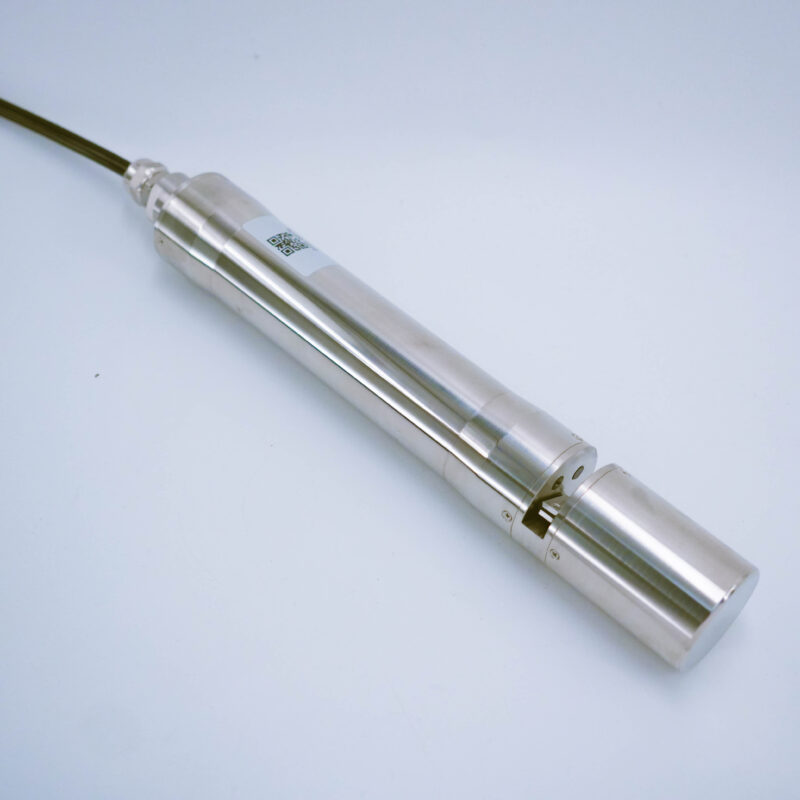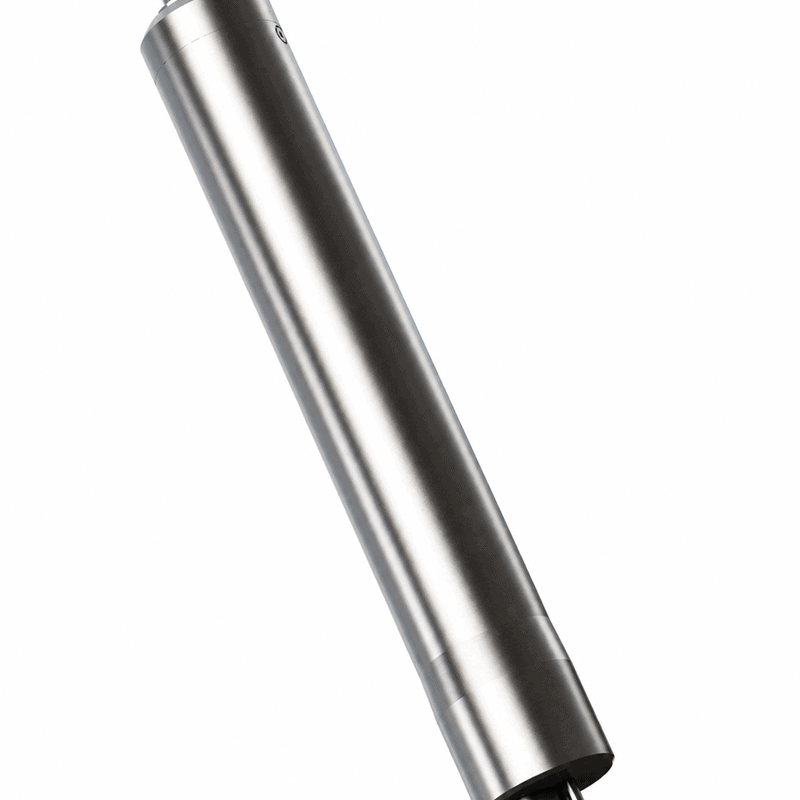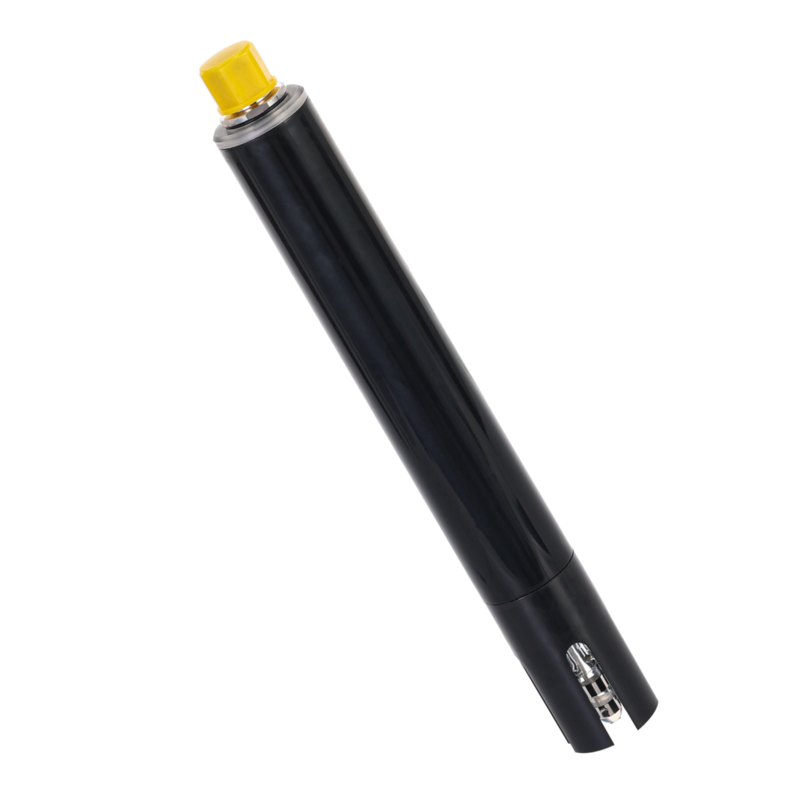
Free chlorine water sensor
- Reagent-Free Operation: Measures free chlorine or chlorine dioxide without the need for reagents, membranes, or electrolyte replacement.
- Advanced Technology: Utilizes constant voltage method for continuous and accurate water quality monitoring.
- Wide Measuring Range: Available in 0–2 mg/L, 0–5 mg/L, and 0–20 mg/L to suit various application needs.
- Easy Integration: Supports RS485 and Modbus RTU communication, compatible with DC12V~DC24V power supply.
- Versatile Applications: Ideal for municipal water, secondary water supply, disinfection processes, and more, providing reliable real-time data.
Overview
4 types of connection available
The sensors are available with different tail connections so that customers can choose according to their needs.
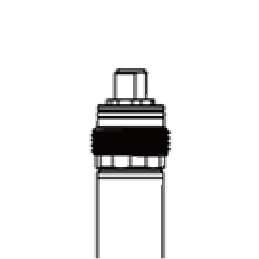
WQS-Cl-C-S01
IP65
5 pole aviation plug, cable length 2m with waterproof connection thread
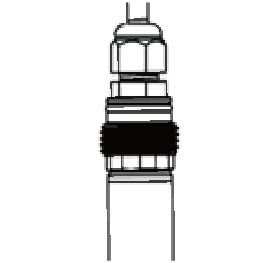
WQS-Cl-C-S11
IP68
Cable extending directly, cable length 6m with waterproof connection thread
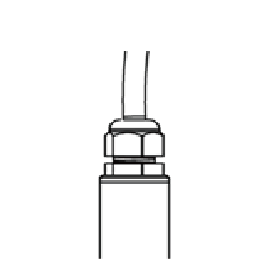
WQS-Cl-C-P01
IP65
5 pole aviation plug, cable length 2m
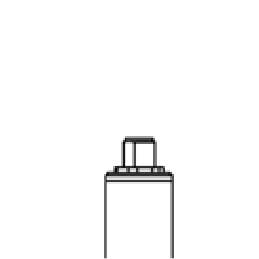
WQS-Cl-C-P11
IP68
Cable extending directly, cable length 6m
Installation methods
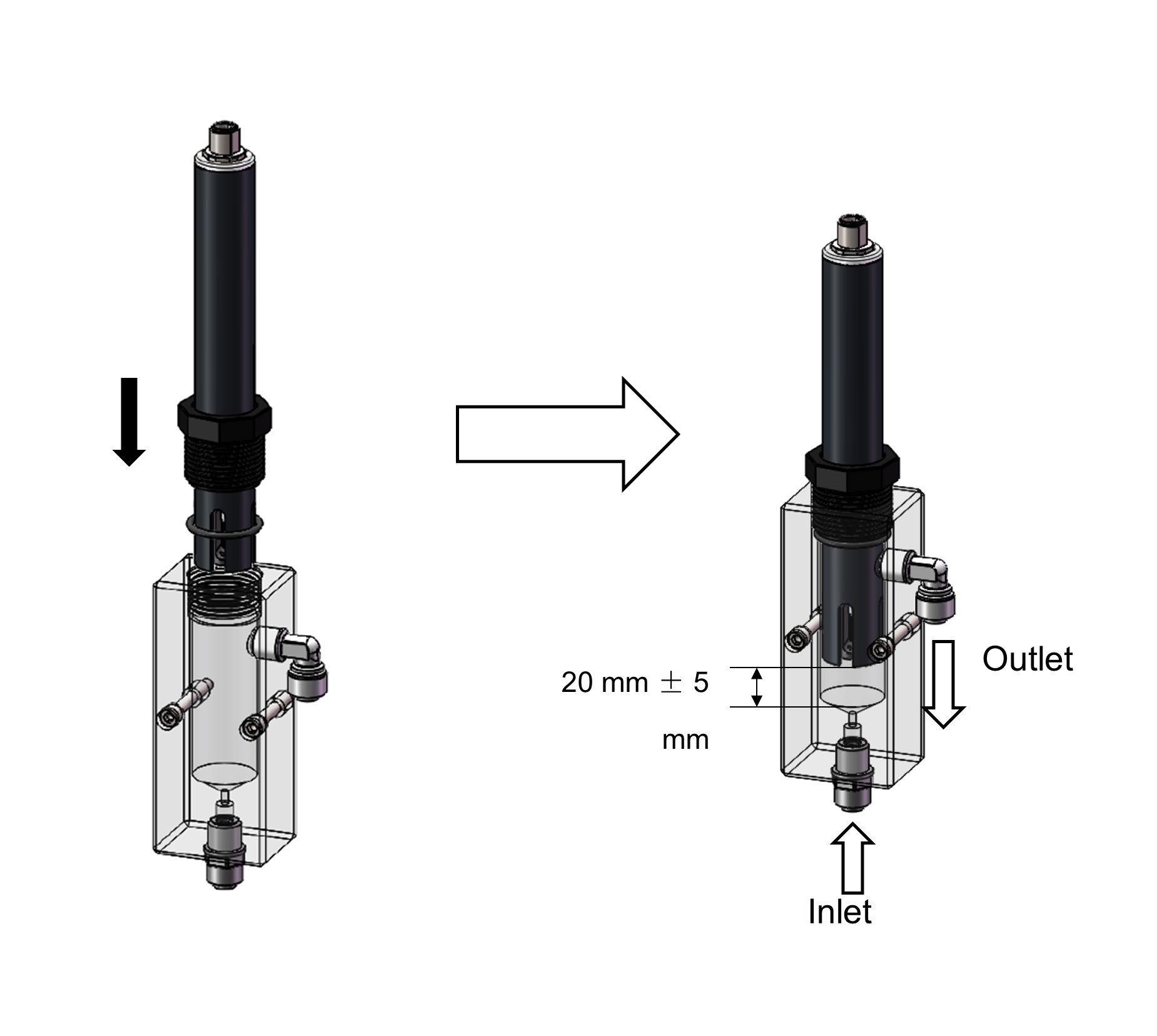
flow through
Install the conductivity electrode into the flow cell as shown below. Then secure the flow cell to the backing plate
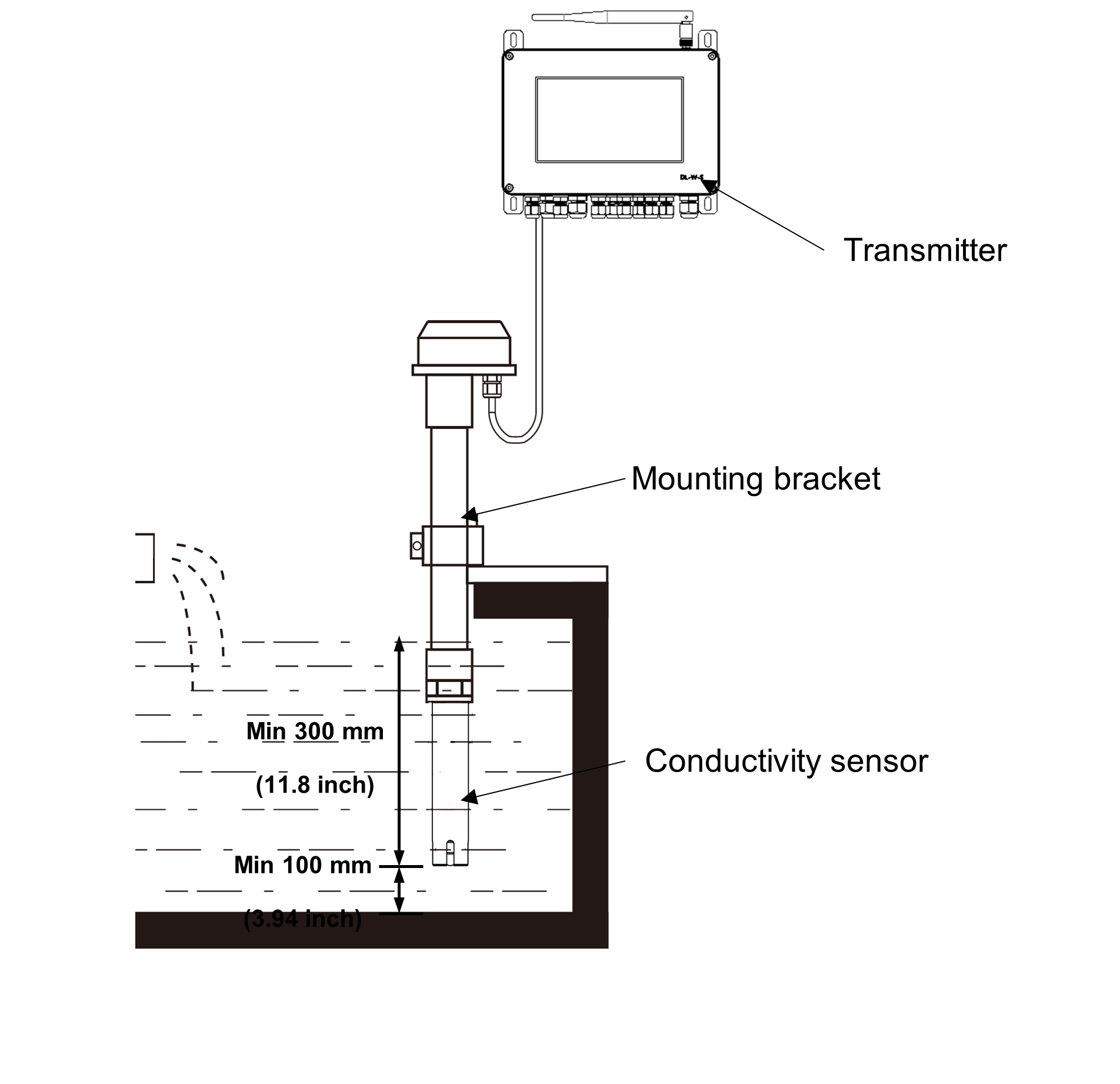
Submerged
Sensors with an extended cable on the end can be directly submerged in water
Ammonia Sensor Buying Guide: How to Choose the Right Ammonia Nitrogen Water Sensor
Selecting the right ammonia sensor for water monitoring requires understanding your application, measurement range, and environmental conditions. This guide walks through the key factors to consider when evaluating an ammonia probe for wastewater or surface water monitoring.
1. Match the Sensor to Your Application
| Application | Typical NH₃ Range | Recommended Sensor Type | Key Considerations |
|---|---|---|---|
| Municipal Wastewater | 0–50 mg/L | Ion-Selective Electrode (ISE) | Reagent-free, handles turbid water, frequent calibration recommended |
| Industrial Effluent | 0–200 mg/L | ISE with high-range membrane | Check for interfering ions (K⁺, Na⁺); validate against lab methods |
| Aquaculture / Fish Farming | 0–2 mg/L (free NH₃) | ISE + pH compensation | Critical: free NH₃ toxicity depends on pH and temperature |
| Surface Water Monitoring | 0–10 mg/L | ISE, submerged installation | IP68 rating required for long-term deployment; biofouling management |
| Drinking Water | 0–1.5 mg/L | ISE or colorimetric analyzer | Need low detection limit; regulatory compliance (EPA, WHO) |
2. Key Specifications to Evaluate
- Measurement principle: Ion-selective electrode (ISE) sensors directly measure ammonium ions (NH₄⁺) without reagents — ideal for continuous online monitoring. Verify the sensor compensates for pH and temperature to calculate free ammonia (NH₃).
- Detection range and resolution: A water ammonia sensor should cover your expected concentration range with sufficient resolution. For low-level monitoring (aquaculture), look for 0.01 mg/L resolution; for wastewater, 0.1 mg/L is typically adequate.
- Response time: ISE sensors typically achieve T90 in under 60 seconds. Faster response enables better process control.
- IP rating: Choose IP68 for submerged or outdoor installations; IP65 is sufficient for flow-cell setups in sheltered environments.
- Output and integration: RS485 Modbus RTU is the standard protocol. Confirm compatibility with your existing SCADA, PLC, or cloud monitoring platform.
3. Maintenance and Total Cost of Ownership
Unlike colorimetric methods, ISE-based ammonia sensors require no chemical reagents — significantly reducing operational costs. However, ISE membranes have a finite lifespan (typically 6–12 months) and require periodic replacement. Budget for:
- Membrane replacement every 6–12 months depending on water conditions
- Weekly to monthly calibration with standard NH₄Cl solutions
- Electrode cleaning to remove biofilm and scaling
4. Installation Checklist
- Flow cell installation: Best for treated effluent or clean water. Requires stable flow rate (250–500 mL/min).
- Submerged installation: Suitable for tanks, open channels, and surface water. Ensure cable strain relief and protection from debris.
- Electrical: DC 12–24V power supply. Ground the sensor housing to reduce electrical noise.
Summary: For most wastewater and environmental applications, an ISE-based ammonia nitrogen sensor offers the best balance of accuracy, low maintenance, and cost-effectiveness — especially when reagent-free operation and real-time data are priorities.
Free Chlorine Sensor FAQ: Common Questions Answered
Q1: What is a free chlorine sensor and how does it work?
A free chlorine sensor measures the concentration of hypochlorous acid (HOCl) and hypochlorite ion (OCl⁻) — collectively known as free available chlorine — in water. Googolwater sensors use the constant-voltage (amperometric) method with a dual platinum ring electrode. The sensor applies a fixed polarization voltage between the working and counter electrodes. Free chlorine molecules are reduced at the working electrode surface, generating a current proportional to chlorine concentration. This method requires no chemical reagents, no membranes, and no electrolyte replacement — making it the most maintenance-friendly approach for continuous online monitoring.
Q2: What's the difference between free chlorine, combined chlorine, and total chlorine?
Free chlorine (HOCl + OCl⁻) is the active disinfectant available for pathogen inactivation. Combined chlorine forms when free chlorine reacts with ammonia or organic nitrogen compounds to create chloramines — these have weaker disinfection power but persist longer in distribution systems. Total chlorine = free chlorine + combined chlorine. Drinking water regulations (EPA Stage 2 DBPR) typically require monitoring both parameters: free chlorine to ensure adequate disinfection, and total chlorine to manage disinfection byproduct formation.
Q3: Do amperometric free chlorine sensors need calibration? How often?
Yes. Free chlorine monitors using the amperometric method should be calibrated monthly for optimal accuracy, or whenever readings drift beyond ±5% of the reference value. Calibration is a two-point process using zero-chlorine water (blank) and a known chlorine standard measured by a DPD colorimetric reference method. The sensor's slope (nA per mg/L) is then adjusted. Note that amperometric sensors do NOT require the frequent membrane or electrolyte replacement needed by traditional Clark-type chlorine sensors.
Q4: What flow rate and installation conditions does the sensor require?
The flow cell requires a stable flow rate of 250–500 mL/min with a maximum pressure of 1 bar. Water temperature should remain between 2–45°C. Avoid air bubbles in the flow cell — they cause erratic readings. For submerged installation, mount the sensor where water circulation is consistent and the probe tip is not buried in sediment.
Q5: Is this sensor approved for drinking water compliance monitoring?
The sensor is CE-certified and designed in accordance with U.S. EPA and WHO guidelines for water quality monitoring instrumentation. For regulatory compliance reporting (e.g., EPA Surface Water Treatment Rule), pair the sensor with a data logger that supports audit trails and scheduled calibration logs. Note that regulatory acceptance varies by jurisdiction — consult your local water authority for specific requirements.
Planning a wastewater disinfection system? Free chlorine monitoring is critical for effluent compliance. Explore the full sensor toolkit for wastewater plants in our Wastewater Treatment Sensor Selection Guide.
Free Chlorine Sensor Model Selection Guide
Googolwater offers four connection variants of the free chlorine water sensor. Use this table to match the right model to your installation environment:
| Model | IP Rating | Connector | Cable | Best For |
|---|---|---|---|---|
| WQS-Cl-C-S01 | IP65 | 5-pole aviation plug | 2 m | Indoor flow-cell installations; easy sensor swap for calibration |
| WQS-Cl-C-S11 | IP68 | Direct cable | 6 m | Outdoor or wet-environment flow cells; no connector corrosion risk |
| WQS-Cl-C-P01 | IP65 | 5-pole aviation plug | 2 m | Indoor tank or pipe insertion with quick-disconnect convenience |
| WQS-Cl-C-P11 | IP68 | Direct cable | 6 m | Permanent submerged installation; reservoirs, tanks, open channels |
Quick rules: Choose IP68 + direct cable (S11/P11) for any outdoor, submerged, or wet-environment deployment. Choose IP65 + aviation plug (S01/P01) for indoor, climate-controlled settings where sensors are swapped frequently.
Application Spotlight: Drinking Water Distribution Monitoring
Challenge: A municipal water utility serving 200,000 residents needed continuous free chlorine monitoring at 12 distribution points to maintain 0.2–0.5 mg/L residual while minimizing chlorine dosing costs.
Solution: Deployed WQS-Cl-C-S11 sensors (IP68, 6 m direct cable) in flow cells at each monitoring station, connected to multi-channel data loggers transmitting readings to the central SCADA system via Modbus RS485.
Result: Real-time chlorine data enabled dynamic dosing optimization — reducing chemical costs by 18% while maintaining 100% compliance with the 0.2 mg/L minimum residual. Sensor maintenance (monthly calibration only) was 70% less labor-intensive than the previous DPD colorimetric auto-analyzer system.
A TDS meter (Total Dissolved Solids meter) is a handheld device that measures the combined concentration of dissolved minerals, salts, and organic matter in water — reported in ppm (parts per million). It works by measuring the water's electrical conductivity: the more dissolved ions present, the higher the conductivity, which the meter converts to a TDS reading. TDS meters are used for drinking water testing, aquarium maintenance, hydroponics, and industrial process water quality control.
Water Quality Data Logger Comparison
Googolwater offers two data logging solutions optimized for different deployment scenarios. Use this comparison table to identify the right model for your monitoring network:
| Feature | On-Site Multi-Channel Data Logger | Outdoor Water Quality Transmitter |
|---|---|---|
| Ideal deployment | Indoor control rooms, instrument cabinets | Outdoor field stations, remote monitoring sites |
| Enclosure | Indoor-grade housing | Weatherproof IP65 enclosure with sun shield |
| Sensor channels | Multi-channel (supports multiple sensors simultaneously) | Multi-channel (supports multiple sensors simultaneously) |
| Display | Backlit LCD display (device-mounted) | Built-in sunlight-readable display |
| Data storage | Local storage (historical data review on-device) | Local + cloud upload (real-time synchronization) |
| Cloud connectivity | Optional (via external gateway) | Built-in wireless connectivity (4G/Wi-Fi models available) |
| SCADA integration | RS485 Modbus RTU | RS485 Modbus RTU + optional 4–20 mA analog output |
| Power supply | AC mains (110–240V) or DC 12–24V | DC 12–24V; solar panel compatible |
| Alarm function | Configurable threshold alarms (visual + relay output) | Configurable alarms (visual on display; SMS/email via cloud) |
| Sensor compatibility | All Googolwater optical and electrode sensors | All Googolwater optical and electrode sensors |
| Certifications | CE, RoHS | CE, RoHS |
Selection Decision Tree
Choose the On-Site Data Logger if:
- The monitoring station is indoors or inside a weatherproof cabinet
- You operate from a control room and prefer on-device data review
- Cloud connectivity is optional (or handled by an existing gateway)
Choose the Outdoor Water Quality Transmitter if:
- The monitoring point is outdoors, exposed to weather
- You need remote access to real-time data without an on-site visit
- Solar power is the preferred or only power source
- You require automated SMS or email alarms for threshold violations
Data Logger FAQ
Q1: What is a multichannel data logger for water quality?
A multichannel data logger is a device that simultaneously records measurements from multiple water quality sensors — such as pH, dissolved oxygen, turbidity, ammonia, and free chlorine — on a single platform. Unlike single-parameter meters, a multichannel unit provides a unified view of water quality from one installation point. Googolwater data loggers support RS485 Modbus RTU communication, enabling integration with SCADA, PLCs, and cloud monitoring platforms for centralized data management.
Q2: How many sensors can one data logger handle?
Googolwater multichannel data loggers support multiple RS485 sensors on a single Modbus bus — the exact number depends on cable length, baud rate, and power budget. In typical configurations, 4–8 sensors operate reliably on one logger. For larger networks, multiple loggers can be daisy-chained or connected through a central gateway.
Q3: Is historical data accessible without cloud connectivity?
Yes. The On-Site Multi-Channel Data Logger stores historical readings locally on the device. Data can be reviewed directly on the LCD display or exported via USB for offline analysis. The Outdoor Water Quality Transmitter also stores data locally but adds cloud synchronization — meaning data is accessible remotely via web dashboard or mobile app even when you are off-site.
Q4: What data export formats are supported?
Both models support CSV export for analysis in Excel, Python, MATLAB, or any statistical software. Cloud-connected models can also push data in JSON format via API for integration with custom dashboards and reporting tools. Logging intervals are configurable from 1 second to 24 hours depending on application requirements.
| Specification | Detail |
| Principle | Free chlorine: Double platinum ring, constant voltage method |
| Parameter | Free chlorine (HClO), Temperature |
| Dimensions | φ25×231 mm (φ0.984×9.094 in) Slightly different sizes for different interfaces |
| Weight | 0.62 kg |
| Power Requirements | DC +12-+24 V |
| Installation method | Submerged, Flow-through |
| Operating temperature | 2-45 °C (35.6-113 °F) |
| Storage temperature | 2-45 °C (35.6-113 °F) |
| Sensor cable length | Cable extending directly: 6 m (19.69 ft.), 5 pole aviation plugs: 2 m (6.56 ft.) Please contact us for other sizes |
| Communication method | Modbus RS485 |
| Sampling requirements | Temperature: 2-45 °C (35.6-113 °F) Flow rate: 250-500 mL/min; Pressure: no more than 1bar, in water flow at 2-45 °C (35.6-113 °F) |
| Certification | CE |
| Warranty period | One year |
| Parameter | Range | Resolution | Accuracy |
| Free chlorine | 0-2 mg/L, 0-5 mg/L, 0-20 mg/L | 0.001 mg/L | ±3% F.S. |
| Temperature | 2-50 °C | 0.1 °C | ±1 °C |